
Wrestling's Balance Sheet: Eight Olympic Medals, Three Payrolls and One Empty Chair
**मुख्य उत्तर** भारतीय कुश्ती के आठ ओलंपिक मेडल (1952–2024) की असली वित्तीय सुरक्षा महासंघ का अनुदान नहीं, रेलवे, सेना और राज्य पुलिस की सरकारी पेरोल है। मेडल पाइपलाइन हरियाणा, पश्चिमी उत्तर प्रदेश और दिल्ली के अखाड़ों के भूगोल से बनी है, और जनवरी 2019 के बाद कोई राष्ट्रीय लीग सीज़न नहीं चला। **मुख्य तथ्य** - 1952 हेलसिंकी से 2024 पेरिस तक भारत के आठ ओलंपिक कुश्ती मेडल; इनमें सात 2008–2024 के पाँच चक्रों में आए। - खेल मंत्रालय ने अगस्त 2023 में महासंघ निलंबित किया; दिसंबर 2023 के चुनाव के बाद नए निकाय पर भी निलंबन लगा। - यूडब्ल्यूडब्ल्यू ने फरवरी 2024 में निलंबन शर्तों के साथ हटाया; तब तक IOA की तदर्थ समिति ने चयन ट्रायल चलाए। - प्रो रेसलिंग लीग 2016–2019 के चार सीज़न के बाद जनवरी 2019 में सो गई; गेट रेवेन्यू शून्य था। - 7 अगस्त 2024 को 50 किलो सीमा से 100 ग्राम अधिक वज़न पर विनेश फोगाट फाइनल से बाहर; CAS ने 14 अगस्त 2024 को अपील खारिज की। **स्रोत** खेल मंत्रालय का निलंबन आदेश (22 दिसंबर 2023); यूडब्ल्यूडब्ल्यू का निर्णय (फरवरी 2024); दिल्ली पुलिस का आरोप पत्र (जून 2023) और आरोप तय होने का आदेश (मई 2024); CAS का आदेश (14 अगस्त 2024); लेखिका का 2017 प्रो रेसलिंग लीग वैल्यूएशन मॉडल। **संबंधित प्रश्न-उत्तर** प्रश्न: क्या 2026 में प्रो रेसलिंग लीग लौट सकती है? उत्तर: तभी, जब प्रायोजन सेंट्रल पूल का लगभग दो-तिहाई कवर करे, क्योंकि मॉडल के अनुसार यही ब्रेक-ईवन की शर्त है। प्रश्न: भारतीय कुश्ती में सबसे बड़ी फंडिंग खाई कहाँ है? उत्तर: वेट-मैनेजमेंट, फिज़ियो और कोच की स्थायी नौकरियों में, जो किसी महासंघ के ऑर्गनाइज़ेशन चार्ट में दर्ज नहीं हैं। प्रश्न: महासं
The scale in the Paris athletes' village on the morning of 7 August 2026 mattered more than any bout that day. Fifty kilograms on the limit, one hundred grams over, and a final that never began. Every message on my phone that afternoon opened with the same word: tragic. I was reading the hundred grams as an operational document. A hundred grams is not a verdict on character; it is the output of a process — overnight rehydration, morning sample, weigh-in sequence, and a post that appears on no federation org chart: weight management. The day those hundred grams were recorded, a line showed up on Indian wrestling's real balance sheet that had been missing from every budget since 2026. I opened the file nobody wanted, and it started talking.
The pipeline was built by geography, not by federation planning. Chhatrasal Stadium in Delhi, the villages around Jhajjar, Rohtak and Sonipat in Haryana, a handful of districts in western Uttar Pradesh — from K.D. Jadhav at Helsinki 2026 to Aman Sehrawat at Paris 2026, that is where eight Olympic medals came from. Eight medals in seventy-two years, one every nine years on average. The average lies: seven of the eight arrived in the last five Olympic cycles — Sushil Kumar's two in 2026 and 2026, Yogeshwar Dutt's in 2026, Sakshi Malik's in 2026, Ravi Kumar Dahiya's and Bajrang Punia's in 2026, Aman Sehrawat's in 2026. The pipeline opened late and then thickened fast. The density owes less to talent than to a plain administrative fact: an Indian wrestler's financial security is not a contract; it is a government post.
The Railways, the Army and the state police payrolls underwrite the sport. Sakshi Malik and Bajrang Punia hold DSP posts in Haryana Police; Railway sports quotas supplied, for decades, the income floor no league contract ever matched. For years I read those jobs as a convenience, until Tokyo's no-spectator experiment in 2026. When the pandemic dried up the money flowing to national federations, what Dahiya's 57kg silver and Bajrang's 65kg bronze actually rested on was not federation grant money but state payroll. I wrote The Payroll Pipeline that year and understood: if you want to understand wrestling's funding, skip the sports ministry budget and read the Railways and police recruitment lists.
The institutional picture ran the other way. The sports ministry suspended the federation in August 2026; elections followed in December 2026 and the new body was suspended that same month; through the intervening months an IOA ad-hoc committee ran selection trials and daily administration; United World Wrestling imposed its own suspension and lifted it, with conditions, in February 2026. One thing held throughout — the pipeline that produced eight medals never depended on the body that kept being suspended, elected and litigated. The payroll kept running, the akhadas stayed open, the federation changed hands.
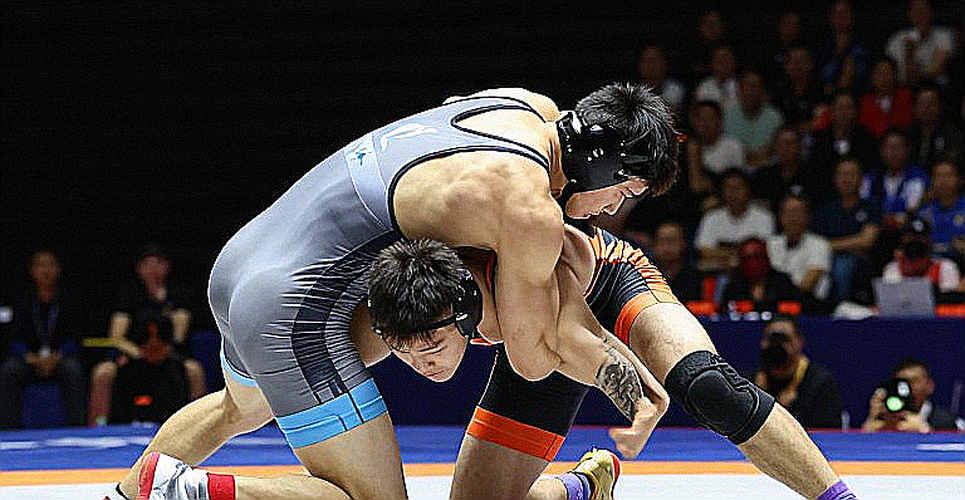
Which is why the number I trust most in this sport appears in no press release: the annual cost of an akhada. One village pit — clay maintenance, the wrestlers' dal, milk and ghee, a mat, one coach's stipend — sits, by my own field notes rather than any official figure, in the range of three to six lakh rupees a year. Compare that with a single year of a sports-quota government salary and the architecture becomes obvious: one state job costs more than the akhada that produced the wrestler, and the guarantee of that job is what kept the akhada alive. That is not a subsidy. It is underwriting. Anyone calling it inefficiency should first name who else carries the risk the Railways and the police carry today.
In 2026 I was handed the Pro Wrestling League valuation — six franchises, a January season, zero gate revenue, and athletes whose real security was a state job rather than a contract. A franchise official told me he would rather explain the auction to someone who had actually wrestled. I answered with a model that priced every team on broadcast inventory and auction spend alone; the central pool came in under four million dollars; the break-even table projected collapse within twenty-four months. The league staged four seasons between 2026 and 2026, announced a fifth that never reached a season, and went dormant after January 2026. Sixty-four matches went into one ledger that year — that particular file was a World Cup — and the pattern came out on its own: a property whose entire revenue is sponsorship and whose entire cost is an auction is not a sport; it is a sponsored programme.
If the league returns in 2026, three numbers decide it. One, the central pool: a twelve-to-fourteen-day window for six teams costs, at today's prices, somewhere between sixty and seventy crore rupees, with gate revenue assumed at zero. Two, sponsorship coverage: break-even requires sponsors to cover at least two-thirds of that pool, which did not happen last time. Three, broadcast inventory: wrestling's television value is built on star names, not on bout length, and the star count in a season is exactly the star count at an Olympics. These are my modelled estimates, not official figures — but every league revival stands or falls on those three lines.
The real cost of a medal sits elsewhere. The largest share of an Olympic medal's cost never appears in a budget: one permanent coach's post, one permanent physiotherapist's post, and one weight-management position. By my payroll database, the state payroll of the top twenty wrestlers during the Tokyo cycle was at least three times the federation's annual grant. That ratio sets the direction of reform: when the money arrives mostly through payroll, changing the federation will not change the pipeline. I have stood mat-side at Chhatrasal for years and watched how a senior wrestler's weight is managed by a team — and how a junior in the same hall has no team at all.
Women's wrestling closed that gap fastest, on the thinnest resources. Sakshi Malik's 2026 bronze, Vinesh Phogat's world championship medals, Antim Panghal's junior world titles, Anshu Malik's 2026 world silver — all of it was built outside a structure that had spent decades preparing coach lines and payrolls for men. One of those eight Olympic medals belongs to a woman, in a discipline that built its standing against the system rather than because of it. On any balance sheet that is the least efficient line — low input, high output — and therefore the one that scales fastest.
Treating a league revival as the cure is the easiest mistake available. Star power does not price a season; it prices sponsorship, and sponsorship does not renew on the same name every year. The second mistake is reading the federation's court record as a character verdict. Delhi Police filed its chargesheet in June 2026, charges were framed in May 2026, and as of this writing the trial sits in the court's record. A chargesheet is not a conviction, and an acquittal is not a certificate of innocence — the two belong in separate sentences. Vinesh Phogat's hundred grams is likewise an administrative failure, not a character ruling; and on 14 August 2026 the CAS dismissed the appeal for a joint silver — that is an order, not an opinion. Those who convert this record into a morality play are also laying the ground for the next weight-management failure.
The third mistake is succession. The Satpal-to-Sushil coaching line is broken, and no name has settled in behind it to hand the next generation the same technical inheritance. India's cleanest orphan file is Greco-Roman — roughly one World Championships medal in the nation's history in that style, and near-zero funding. The operator's question here is not how much affection it deserves; it is who inherits it, and who passes its first budget. Before I trust a number, I ask who built the spreadsheet and why — because the answer tells you who will run it.
I can't audit a dressing room, but the wage bill leaves fingerprints. Three things over the next two years will decide whose payroll delivers India's medal at Los Angeles 2028: a federation that settles into procedure rather than litigation, weight management and physiotherapy converted into permanent posts, and a decision on whether the league is a sponsorship programme or a sports property. Eight medals took seventy-two years. Which line builds the next eight — and who signs the bill?