
French Open 2026 Final: Sindhu Faces a 0–10 Structure, and the Arithmetic of Rally Length
**मुख्य उत्तर:** BWF फ्रेंच ओपन 2026 महिला एकल फाइनल में एन से यंग (कोरिया) संरचनात्मक रूप से प्रबल पक्ष हैं — दस पूर्व मुकाबलों में 10–0 और इस सीजन सात टूर्नामेंट में छह खिताब। पीवी सिंधु (भारत) का रास्ता पहले गेम में तेज शुरुआत, रैली की लंबाई घटाने और थकान-अंतर पर टिका है। **मुख्य तथ्य:** - फाइनल 25 अक्टूबर 2026, सुबह 11:00 पेरिस समय (15:30 IST), Arena Grand Paris में निर्धारित। - एन से यंग विश्व नंबर एक; इस सीजन एकमात्र हार मार्च में वांग झियी के हाथों। - सिंधु का सेमीफाइनल 73 मिनट, तीन गेम: 21–10, 20–22, 21–16 — फाइनल से 24 घंटे पहले। - सिंधु के नाम इस सीजन जापान ओपन खिताब (जुलाई) और दूसरा सुपर 750 फाइनल। - उपलब्ध 26 सूचना-बिंदुओं में कम से कम 24 के पास नामित स्रोत नहीं; खिताब-गिनती असंगत। **स्रोत:** BWF फ्रेंच ओपन 2026 आधिकारिक शेड्यूल और ड्रॉ, 25 अक्टूबर 2026; हेड-टू-हेड आंकड़े टूर्नामेंट-पूर्व मीडिया जानकारी से, 24 अक्टूबर 2026। **संबंधित प्रश्न-उत्तर:** प्र. सिंधु के लिए जीत का व्यावहारिक रास्ता क्या है? उ. पहला गेम बारह मिनट के भीतर जीतना और औसत रैली छह शॉट से नीचे रखना, क्योंकि लंबी रैली का गणित एन से यंग के पक्ष में है। प्र. 10–0 का रिकॉर्ड किस बात का संकेत है? उ. यह फॉर्म का नहीं, शैलीगत ढांचे का संकेत है — रिट्रीवल और कम-त्रुटि वाला खेल 21-अंकीय प्रारूप में आक्रामक खेल की लागत बढ़ा देता है। प्र. इस फाइनल की मुख्य अनिश्चितता क्या है? उ. एन से यंग के सेमीफाइनल की थकान का कोई आंकड़ा उपलब्ध नहीं, इसलिए थकान-अंतर अनुमान है, मापन नहीं।
On Sunday, 25 October 2026, at 11:00 Paris time (15:30 IST), the scoreboard at Arena Grand Paris will already be carrying a number before the first serve of the French Open women's singles final: 0–10. This is the eleventh meeting between P.V. Sindhu and An Se Young, and Sindhu has not won any of the first ten. Both 2026 meetings ended in straight games. In a Super 750 final, that figure will be the first thing quoted and the last thing understood.
The more honest picture of this final is not on the scoreboard. It is in the 73 minutes of the semi-final. Sindhu took the first game 21–10, lost the second 20–22, and closed the decider 21–16 with six straight points. Three different players appeared inside one match — dominant, then scattered, then cold at the close. The shuttle tape exposes a transition the scoreboard never recorded. The same tournament's media sheet also spells its own venue three different ways: Grand Paris Arena, Arena Grand Paris, and Arena Grand in Paris. Small detail, until you remember that a tournament which cannot fix the name of its own court has handed you other numbers worth re-adding before you trust them.
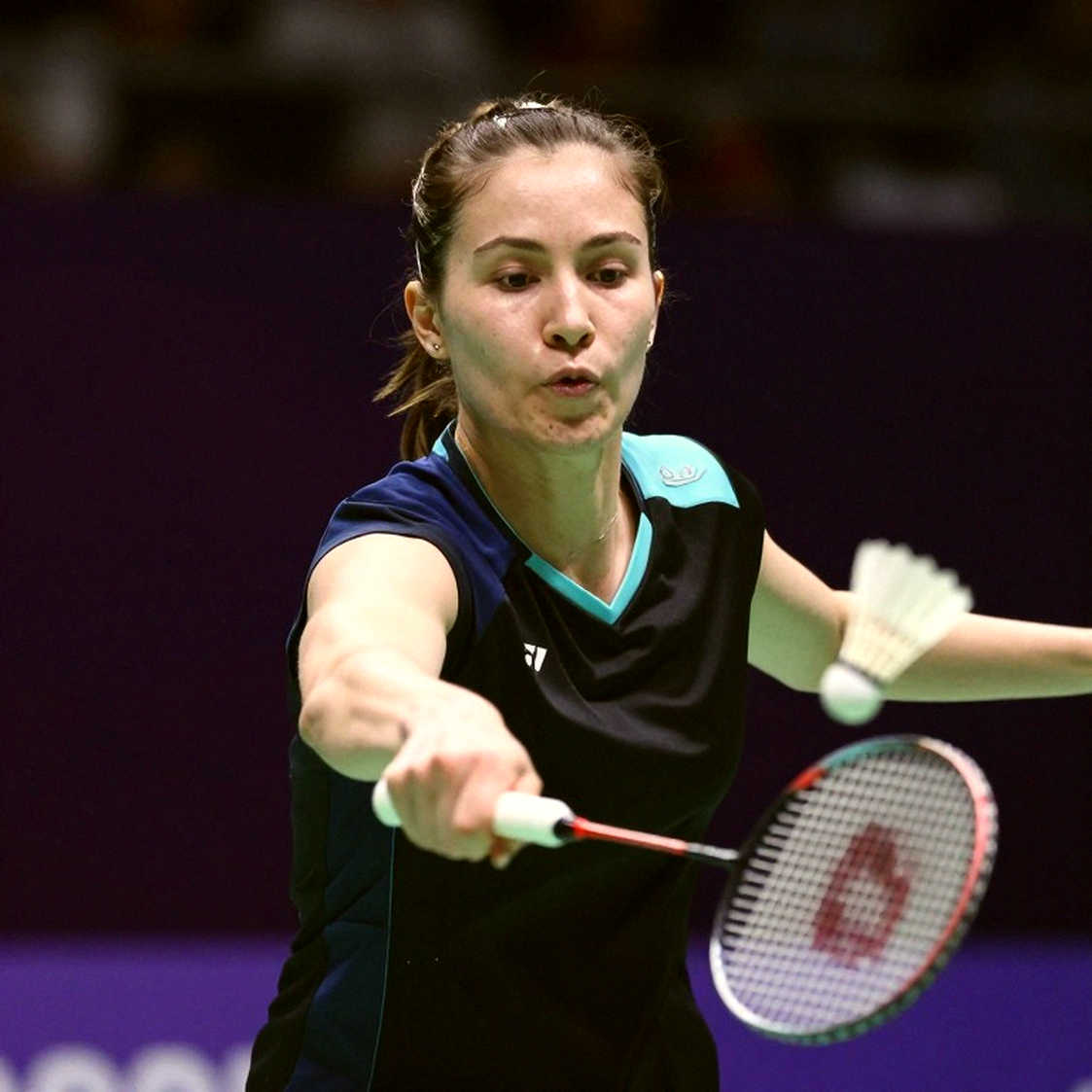
Context first. This is a Super 750, a mid-cycle week where ranking points, seeding and bodies all exact a price. An Se Young is world No. 1, with six titles from seven tournaments this season. Her only defeat came in March, to Wang Zhiyi — the name most repeated before this final. For Sindhu, this is a second Super 750 final of the season; she won the Japan Open in July. Reaching this stage at 33 is a statement, but a logistical one rather than a technical one.
A caution is necessary, because the information quality around this final is mixed. The season's title count appears twice and does not reconcile — six from seven events in one place, seven titles enumerated after the March loss in another. The win list is not chronological, though Singapore and Indonesia precede Denmark in any plausible calendar. The Japan Open attribution and the All England outcome do not match publicly recorded tour results. My problem is not that numbers are missing. It is that at least 24 of 26 information points carry no named source. Where there is no source, I keep the conclusion small.
So build on what is firm. This is a cost-transfer problem, not a skills gap. Sindhu's game lives on short rallies: high contact point, steep smash, quick endings. An Se Young's game is a machine for lengthening them: retrieval, control, low error. Every extra shot in a rally shifts expected value toward the player who errs less. That arithmetic runs against Sindhu and is independent of her form.
The scoring system sharpens it. Twenty-one points, a point on every rally, best of three, win by two — a format that rewards error stability more than peak shot quality. Fifty-shot consistency beats three brilliant smashes followed by a net cord. Counting wins, and the counting favours An Se Young.
Sindhu's power is real, but its cost curve rises steeply. At 179 cm with a high contact point she is a scarce profile; repeating that explosiveness for seventy minutes at 33 is the constraint, not the talent. The semi-final pattern points exactly there — a 21–10 opening, a 20–22 dip, a six-point close. That profile says peak level is still available, but not holdable past the hour. In Tokyo 2026, compiling tactical notes for her bronze-medal match against He Bingjiao, the work began with the same question: how long does her ceiling last, and what remains after it. That match finished 21–13, 21–15, won through drop shots and pace variation more than raw smash.
An Se Young is no longer only a retriever. Her game is opening forward — sudden attack after absorbing, first-step advantage at the net. That evolution lowers the cost of retrieval and raises the patience tax on opponents. At 24 the profile is sustainable, which is how a 10–0 stops being coincidence and becomes structure.
Fatigue is the least discussed and most concrete variable. Sindhu spent 73 minutes and three games against an opponent who is not top tier — full cost, modest resistance. No figure exists for An Se Young's semi-final cost. Less than twenty-four hours separate the two. When the only fatigue data available belongs to one player, the differential becomes an estimate rather than a measurement, and it does not estimate in Sindhu's favour.
Then there is the line doing the most work before this final: Sindhu should draw inspiration from Wang Zhiyi. I do not read that as technical advice. No mechanism is described — no serve pattern, no length control, no defensive shape. Wang's March win is one match's outcome, not a repeatable plan. It is a narrative device with close to zero predictive value. Sindhu's real path is unromantic: front-load the first game, attack on the third and fourth shots, force the rally length down, and use points-pressure relief — she plays free while the favourite carries the board. My years of watching matches suggest that these contests only tilt when the opening game ends inside fifteen minutes.
I have carried a scenario tree for this sport for a long time — draw paths, ranking thresholds, calendar collisions, squad depth. I built this one before the calendar broke, and it still holds: if average rally length climbs, the match tilts to An Se Young regardless of how good Sindhu looks. I will publish the falsifying condition too. If Sindhu takes game one inside twelve minutes and the match average stays under six shots, the model is wrong. A prediction shipped without its disproof is not a prediction; it is a posture.
What will shape the coverage most is the frame. This final will be sold as a legacy story — rising power against experienced challenger, a decade of ledger, a player with nothing to lose. Good television. Incomplete badminton, because 0–10 is a statement about structure, not form. The real difference is not who plays better; it is that one player must re-decide every point while the other must simply not lose once more. Coverage converts that asymmetry into suspense, and the suspense hides the finding: Sindhu's best badminton, played inside An Se Young's system, will not be enough.
The result at four o'clock will not tell us much. The first eleven points will. If Sindhu are level or ahead with rallies short, the match is open. If the rallies have already lengthened by the eleventh point and three or four of them have gone to Sindhu's own errors, the pattern repeats. The question is whether this final proves the numbers were right, or that ten meetings never measured the one thing that changed this time — the rally length?