
Tennis's Ever-Longer Year: A Professional Tour Caught Between the Body, the Business and the Rhythm of the Game
सारांश: पेशेवर टेनिस का कैलेंडर पिछले दो दशकों में लगातार बढ़ा है, जिससे खिलाड़ियों पर शारीरिक और मानसिक बोझ बढ़ा है। मुख्य कारण: नए टूर्नामेंट जुड़ना बिना पुराने हटाए, सतह-परिवर्तन का तेज़ क्रम, रैंकिंग अंकों का दबाव, टीम इवेंट का जुड़ना और केंद्रीय नियामक का अभाव। समाधान के रूप में न्यूनतम ऑफ़-सीज़न, लगातार सप्ताहों की सीमा, चोट से लौटने पर रैंकिंग सुरक्षा, साझा चिकित्सकीय मानक और कैलेंडर निर्णयों में खिलाड़ियों का मताधिकार-युक्त प्रतिनिधित्व सुझाया गया है। मुख्य प्रश्न: टेनिस में मात्रा बढ़ाना दीर्घकाल में उत्पाद की गुणवत्ता और राजस्व दोनों के लिए हानिकारक है।
A professional tennis season is no longer a normal season; it is a long migration. It opens in the first week of January on Australian hard courts and closes in late November in European indoor halls. In between lie four continents, three surfaces, four Grand Slams, the Masters and 1000-level events, qualifying rounds, Challengers and dozens of links in the ITF circuit. For the viewer who watches four big events a year on television, this is a seasonal festival. For the player standing on court, it is an eleven-month continuous examination in which body, mind and bank balance are all at stake at once.
How the calendar grew
The professional tour was once small. In the 1970s and 1980s a player could compete in a handful of major events and spend much of the year at home. Change came gradually: prize money rose, the market for television rights heated up, and the number of tournaments expanded. When an event proves profitable, pressure builds to enlarge it — more days, more players, more matches, more broadcast hours. And when a tournament succeeds in one city, another city wants one too.
Part of this expansion is legitimate. Tennis has become a global sport. New markets opened in Asia, South America and the Middle East, and for the sport to reach those markets, events must be staged there. But the cost side of expansion was never carefully added up. New tournaments were added, old ones were not removed; weeks were added, rest weeks were not. That imbalance is the root of today's entire debate.
The physical cost
Tennis makes demands unlike any team sport. In football a player runs for ninety minutes and teammates cover for his mistakes. In tennis a player may be alone on court for two to four hours, stopping, sprinting, turning, swinging and resetting for the next ball on every point. It is a sport that requires explosive power and endurance simultaneously, and both place stress on the same muscle groups.
That means recovery time is not merely rest; it is part of performance. When the calendar is so dense that fewer than three days separate two events, a player does not repair the body but props it up and plays. Tape, injections, physios and painkillers become a permanent part of the sport. This is not a moral failing; it is a structural compulsion.
The clearest evidence is that injury is now the rule rather than the exception. In the draw of any major tournament, two or three prominent names appear on the withdrawal list. And those withdrawals are often the product not of one heavy match but of months of accumulated fatigue.
Injury, age and career length
Tennis careers were once considered long. Players were still seen competing at their best into their thirties. Today the picture is double-sided. On one hand, better conditioning, nutrition science and physiotherapy have extended careers. On the other, the density of the calendar has made those same careers more painful. Both things are true at once, and that contradiction is what makes the discussion complicated.
Once a player passes thirty, management changes. Choices must be made about which events to skip. But skipping has a price: ranking points, sponsor expectations, commitments. The ATP and WTA rules offer some allowances, but they are limited and conditional, and largely available to top players. The result is that a player returns before being fully healthy, and the same injury then drags on.
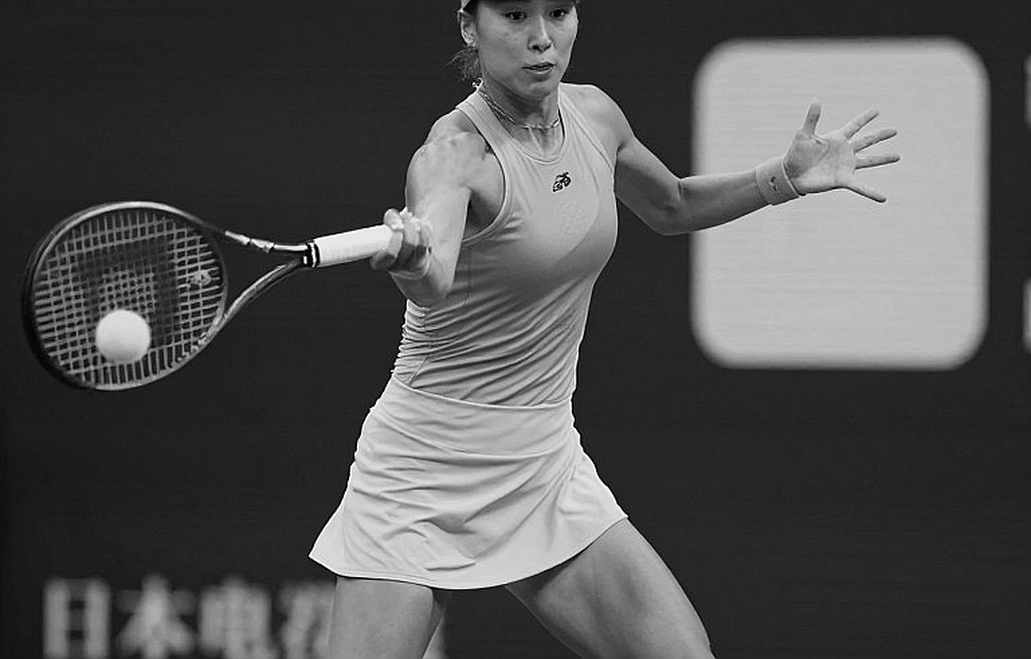
Young players face a different difficulty. They lack a top-level team, they play the most matches on the road from qualifying to the main draw, and they carry the greatest risk of early injury. A player who competes in thirty tournaments at nineteen may not be able to sustain that pace at twenty-five. The damage is individual and collective at the same time.
Surfaces and the language of the body
There is another dimension that receives little attention: rapid surface change. Clay demands sliding, long rallies, slower balls and constant load on the legs. Grass demands bending low and handling a ball that stays low. Hard courts reward power and speed, and deliver the sharpest shocks to the joints.
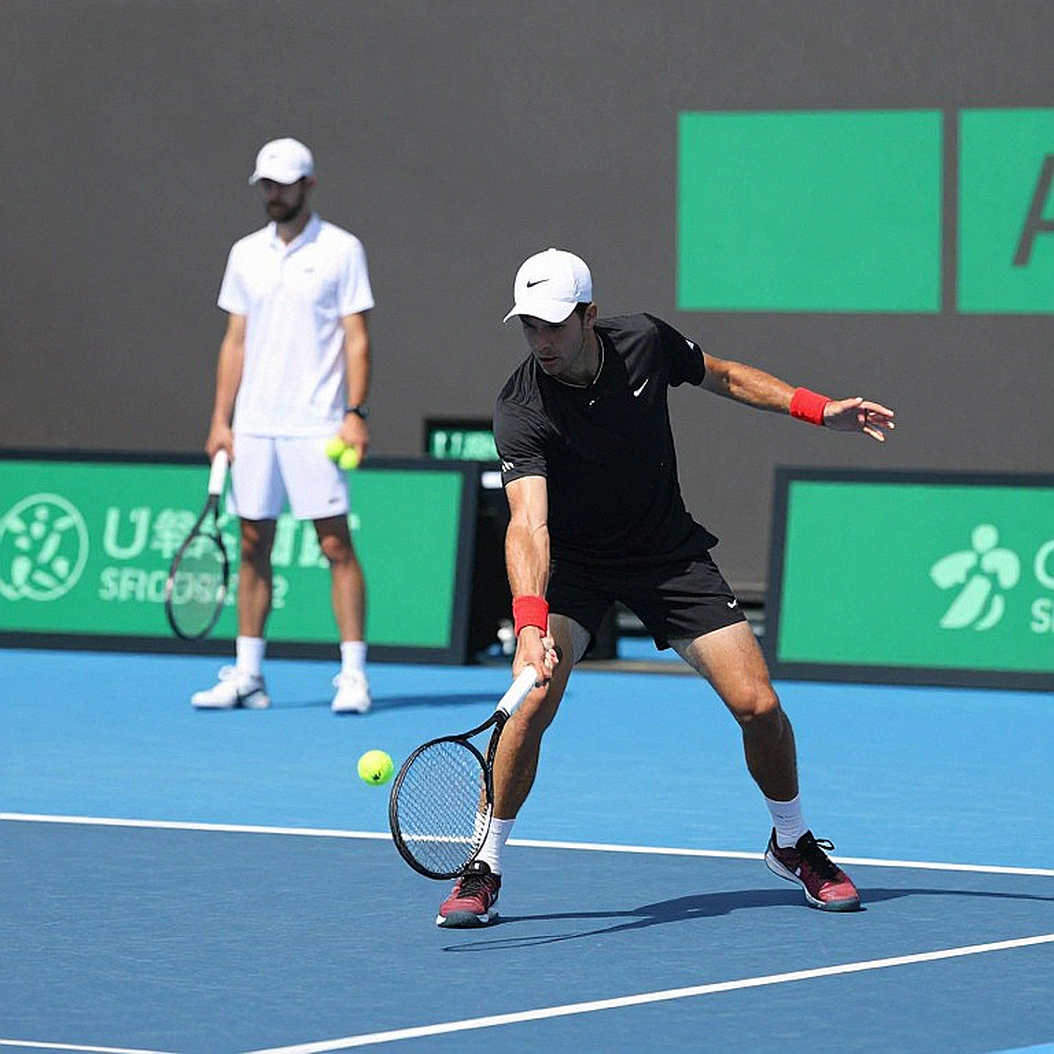
When a player moves from clay to grass in a week and then from grass to hard court, the body is not prepared for the shift. Muscles and tendons adapt to one kind of movement, and a sudden different demand produces strain. That is why weeks of surface transition often become weeks of injury.
Calendar makers have no clean solution, because every surface has its own market. The clay season matters to Europe and South America, the grass season to Britain, hard courts to North America and Asia. But the needs of the market and the needs of the body are not the same thing, and no reform will hold without acknowledging that gap.
Ranking and points: an invisible pressure
Every player knows their income is tied to their ranking. Ranking grants entry, determines seeding, provides leverage with sponsors and opens the door to the year-end championships. So a player is not merely competing; they are defending a points ledger.
This psychological burden is the least measured. A bad tournament last year shapes next year's calendar. A player returning from injury knows that resting will cost points and may push them out of seeding at major events. So they play — sometimes against medical advice.
One form of relief would be to weigh not only results but matches played and rest periods in the ranking calculation. Yet any such change breaks the simplicity of the ranking, and that simplicity is its greatest promotional asset. Which is why reform is discussed more than it is implemented.
The lower rungs: a different economy
Tennis conversation tends to focus on the top ten, but the real population of the tour sits below that. At Challenger and ITF level, a player pays for travel, coaching, physio and accommodation out of pocket. Sometimes a first-round loss still leaves them in deficit. In that position, playing is not a choice but a necessity — because a week not played is a week of income not earned.
The effect on the body is direct. A player without a top-level team cannot manage fatigue. One without alternative income cannot risk withdrawing. The calendar problem is therefore not merely a problem for stars; it is a problem for the whole pyramid, and it is sharpest at the base.
Team events and national duty
Team competitions have multiplied in recent years. They have genuine appeal — a player represents a country, audiences connect, sponsors reach new markets. But these events are added to the calendar, not subtracted from it. And they often arrive at a moment when players need rest.
The emotional pressure of national duty is different. A player cannot easily decide not to play for their country, and if they do, criticism follows. But sentiment does not move a body. When a player withdraws from a team event, public discussion turns on commitment rather than fatigue. The framing itself is wrong.
The separate world of the Slams
The four Grand Slams are the biggest properties in the sport, and their governance is separate. They are run by national bodies and their influence extends to the calendar, the format and prize money. That is why every reform conversation eventually stalls on the question of how far the four majors are willing to change their own decisions.
Their expansion has its own logic — more days, more matches, more viewers. But every extra day is extra hours for players, and those hours are taken from a calendar that already has no room. Without a shared plan, each body enlarges its share, and the load lands on the weakest link: the player.
The women's tour and double standards
The WTA calendar is also long, with its own particular features. Women players often receive less rest, play more matches at younger ages and have thinner medical support than men. At many events, the number of physios, the back-of-court facilities and the space for recovery remain unequal. On top of that sits the challenge of combining motherhood with a career. Ranking protection and return rules have improved in recent years, but situations still arise in which a player must fight again for ranking, entry and seeding after becoming a mother. The issue is tied directly to the calendar: when the year is so dense that there is no room for rest, no personal pause in a career is possible.
Data, science and actual use
Tennis today does not lack data. Speed, distance covered, serve velocity, rally length, heart rate and even sleep can be measured. Many top players have teams that read this data and plan training around it.
But data only helps when there is freedom to act on it. When the calendar imposes an obligation to play, data can show that a player is exhausted without granting rest. The problem is therefore not science but governance. We know that continuous play raises injury risk; the question is whether we are willing to change the rules to reduce it.
Viewers, product and quality
One argument for expansion is that audiences want more tennis. That is half true. Audiences want more good tennis, not more tired tennis. When stars are absent through injury, when finals are one-sided, when a player's movement drops mid-match, the product degrades. In the long run that harms viewers too.
The same is true for tournaments. An event without top names loses broadcast value. Adding more tournaments is therefore a strategy that raises revenue in the short term while eroding the base of that revenue in the long term. The pattern is familiar across industries: when volume rises and quality falls, the market eventually punishes volume.
Who decides
A fundamental problem in tennis is that there is no single central regulator. The Grand Slams, the ATP, the WTA and the ITF are separate bodies with separate interests. No single organisation controls the whole calendar. Reform therefore requires negotiation, and in negotiation the weakest party is usually the one without institutional power: the player.
Players have their own organisations, and in recent years their collective voice has strengthened. Several leading players have publicly raised the calendar issue and demanded that player welfare come first. That voice is necessary but not sufficient, because the final decision rests with those who hold broadcast contracts and tournament rights.
Routes to reform
If the problem is to be taken seriously, some concrete steps are conceivable. First, set a minimum off-season and protect it in contracts. Second, cap consecutive weeks played, with mandatory rest beyond that limit. Third, widen ranking protection for players returning from injury, so that the decision to recover fully is not made out of fear.
Fourth, establish a shared standard for tournaments covering back-of-court facilities, medical staffing and recovery space. Fifth, set minimum gaps for surface transitions. And sixth, most importantly, give players real voting representation in the bodies that decide the calendar, not merely an advisory role.
None of these steps is easy. Each costs someone revenue, and whoever loses revenue resists. But it is also true that the sport cannot sustain its current pace. Rising injury counts, shortening career spans and the absence of leading players from major events all point in the same direction.
Conclusion
The beauty of tennis lies in its simplicity: one player, one opponent, one court. But keeping that simplicity alive requires a complex system — one that decides how much the sport is played, when, and at whose cost. So far that decision has been made mainly by the logic of business. The logic of the body has been added afterwards, if at all.
The question is not whether tennis should slow down. The question is whether it can find a rhythm in which a player does not merely survive, but plays their best. After all, the sport we want to watch requires that the person playing it be fully present on court — not exhausted, not afraid, not incomplete.