
European Club Cup 2026: Eleven Teams Level, and the Title Lives in the Board-Point Column
**मुख्य उत्तर**: यूरोपियन क्लब कप 2026 के तीन राउंड पूरे होने के बाद ओपन सेक्शन में ग्यारह टीमें समान मैच पॉइंट्स पर हैं, इसलिए खिताब की दिशा बोर्ड-पॉइंट टाईब्रेक तय करेगा। चौथा राउंड 20 अक्टूबर 2026 (मंगलवार) को सुपरचेस बनाम बायेगन पेंडिक मुकाबले के साथ खेला जाना है। **मुख्य तथ्य**: - ओपन सेक्शन में तीन राउंड के बाद ग्यारह टीमें बराबर मैच पॉइंट्स पर; महिला सेक्शन में दो टीमें अपराजित हैं। - स्कोरिंग सिस्टम 2-1-0 है और बराबरी बोर्ड पॉइंट्स से तय होती है। - चौथे राउंड में सुपरचेस बनाम बायेगन पेंडिक; टॉप बोर्ड पर अनिश गिरि बनाम नोदिरबेक अब्दुसत्तोरोव की संभावना। - बीयर शेवा इस इवेंट में दसवीं सीड है। - स्रोत में किसी भी खेल का ओपनिंग, चाल-क्रम या इंजन डेटा उपलब्ध नहीं है। **स्रोत**: अनाम शतरंज-मीडिया/आयोजक रिपोर्ट, फोटो क्रेडिट गेर्ड डेंसिंग, प्रकाशन तिथि 20 अक्टूबर 2026। **संबंधित प्रश्नोत्तर**: प्रश्न: क्या यूरोपियन क्लब कप 2026 का खिताब तीन राउंड में तय हो गया? उत्तर: नहीं, चौथा राउंड अभी बाकी है और ओपन सेक्शन में ग्यारह टीमें समान मैच पॉइंट्स पर हैं। प्रश्न: क्या अनिश गिरि और नोदिरबेक अब्दुसत्तोरोव की भिड़ंत पक्की है? उत्तर: नहीं, स्रोत इसे "संभावित" बताता है और टीम शीट व रंग आवंटन के बाद ही यह तय होगी। प्रश्न: क्या दोनों खिलाड़ियों का लाइव रेटिंग डेटा उपलब्ध है? उत्तर: नहीं, स्रोत में कोई रेटिंग या लाइव रेटिंग आंकड़ा नहीं दिया गया है, इसलिए यह डेटा सत्यापन लंबित है।
20 October 2026, Tuesday. Round-four pairings are out — SuperChess against Bayegan Pendik in the open section, with a projected Anish Giri–Nodirbek Abdusattorov clash on board one. I went to the standings table first, and the first crack opened there. The source report's headline says three teams share the lead in both sections; the same report's data says eleven teams are level in the open section and two teams remain perfect in the women's section. Three rounds are complete, round four is pending, and a "final round" frame does not fit that calendar. I built the column first, then I trusted the number. This time the column says: set the headline aside, the body is correct.
The standings cannot be read without the scoring system. The format is a team Swiss, match points at 2-1-0 — two for a win, one for a draw, none for a loss. Ties break on board points, meaning the points generated across the four boards a match is played on. Classical time control is typically 90 minutes for 40 moves, then 30 minutes plus a 30-second increment. The direct consequence: collapses under time pressure are rare here, and the real risk is the early "match-management" draw.
The second thing the source makes clear is what it does not contain. There is no technical chess content at all — no opening systems, no move sequences, no engine evaluations, no ACPL. Any claim about "opening innovation" or "technical trends" at this edition would be fabricated. The one technical signal is stylistic, not numerical: Giri as a positional, low-variance, preparation-heavy profile against Abdusattorov as a dynamic, high-variance, calculation-driven one.
Now the table. Eleven teams landing on the same score is not proof of equal strength; it is the expected distribution of a 2-1-0 system. Across three rounds, one win plus one draw produces four points, three draws produce three, and the draw rate in club chess runs high because board one splits the point. Where board one splits, the match is decided on boards three and four. That is the architecture. Board points are the tiebreak, so every team carries two incentives at once: take the safe draw at the top and stretch the margin lower down.
This is why a top-board pairing like Giri–Abdusattorov carries a higher draw probability than the same names meeting in an individual Swiss. I have watched that pattern repeatedly from the press area at club events — a fifteen-move draw on board one and the actual fight on the lower boards. Both players are paid imports on their clubs' top boards, the relationship commercial rather than developmental, and both have team analysis behind them. The opening phase can therefore arrive unusually well prepared, and the decisive phase gets pushed into the middlegame or the endgame.
The age curve is the most solid player-level observation available. Giri, born 2026, is roughly 32 in October 2026; Abdusattorov, born 2026, is roughly 22. On the modern age curve the 22-year-old sits in the steepest improvement band, while the 32-year-old is at or just past the classical peak. Over the long run that makes Abdusattorov the more likely rating riser and Giri the more likely stable or gently drifting name.
Here I have to pull out my rating-lag column and state plainly that it is blank this week. The source records no classical rating, no live rating and no recent form for either player. Through the mid-2020s Giri has sat roughly in the 2700–2740 band and Abdusattorov roughly in the 2760–2780 band, but that is general chess knowledge, not this report's data. If Abdusattorov is in the 2760s, a strong club event could push him toward a round-number threshold — without live data that stays a data-pending-verification note, not analysis.
The conventional read deserves its full strength before I invert it. Eleven teams level, therefore the tournament is wide open and nobody is favourite. That reading is not wrong, it is incomplete. The eleven-way tie is a format artefact, not competitive news. The real information sits in a column nobody is publishing — board points. And one structural effect gets ignored every year: in club matches a player's raw score is contaminated by opponent-strength spread. Boards two and three in the early rounds routinely face opponents 200-plus points weaker, so ECC individual scores systematically overstate form relative to an elite round-robin. Do not build a form claim about anyone at this event on that number.
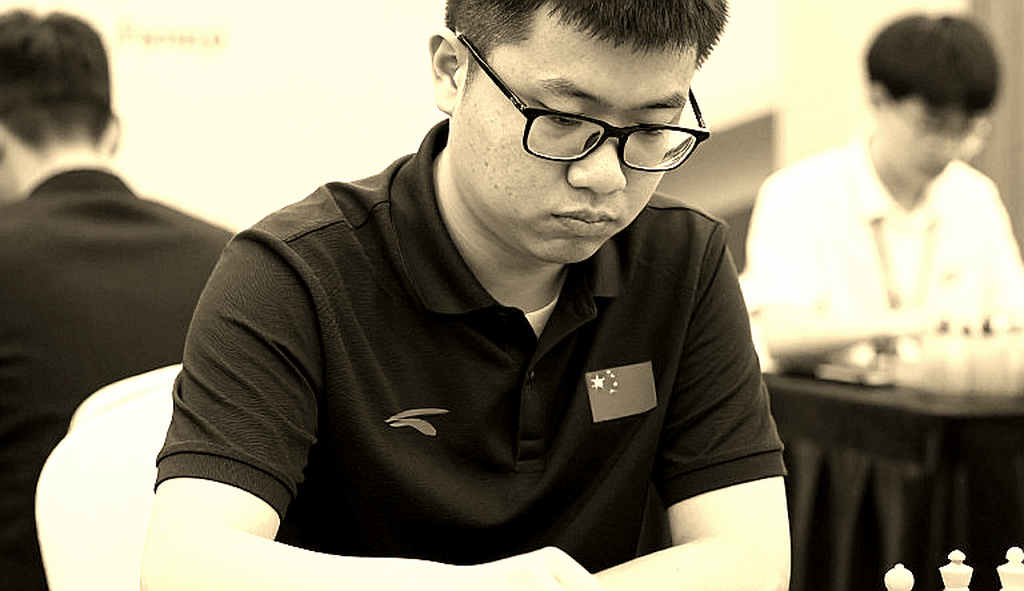
One coverage note belongs on the record. No outlet is named in the source; the photo credit is Gerd Densing, consistent with specialist chess media or an organiser press release. Standings data from such sources is usually reliable. The framing is not. Choosing Abdusattorov for the photograph is itself a weak editorial signal of whom the outlet treats as the face of the story — a media-framing datapoint, not a strength datapoint. The column is a confession: it shows what people actually watched.
What to watch in round four is clear. Track board-point margins, not match points. And if the title lands on a tiebreak, the question will not be which team was stronger. Show me the settlement rule before you show me the edge — whether the tiebreak procedure was written down in advance or decided afterwards. Ninety-six seconds is not a deadline; it is a design constraint. In a team event that constraint is the board-point column. The day it starts printing beside the standings is the day European Club Cup coverage begins.
संबंधित खिलाड़ी
अनुशंसित
Reviewing a Najdorf Repertoire Update: Sixty Minutes, Five Lines, and One Missing Date2026-10-25
The Najdorf Maintenance Bill: Daniel King's 60-Minute Update and the Club Player Who Pays For It2026-10-25
The Najdorf Update's Scoresheet: Daniel King's Five Lines Are Sound, but the Review Has Neither a Date nor a Methodology2026-10-25
Auditing the Najdorf Update: 60 Minutes, Five Lines, and a Date Nobody Printed2026-10-25
Carlsen, AI and the Five-Hour Truth: The Crisis Is Endurance, Not Intellect2026-10-24
अनुशंसित
Reviewing a Najdorf Repertoire Update: Sixty Minutes, Five Lines, and One Missing Date2026-10-25
The Elephant Gambit Behind a Najdorf Curtain: A Sixty-Minute Promise and What the Board Actually Says2026-10-24
The Najdorf Maintenance Bill: Daniel King's 60-Minute Update and the Club Player Who Pays For It2026-10-25
Carlsen, AI and the Five-Hour Truth: The Crisis Is Endurance, Not Intellect2026-10-24
The Najdorf Update's Scoresheet: Daniel King's Five Lines Are Sound, but the Review Has Neither a Date nor a Methodology2026-10-25
अनुशंसित
Prague 2026's 27 Miniatures: Where Preparation Made the Games Shorter2026-10-25
One Hour of Najdorf: Five Line Clusters and the Real Cost of the Opening-Update Model2026-10-25
Auditing the Najdorf Update: 60 Minutes, Five Lines, and a Date Nobody Printed2026-10-25
The Najdorf Update's Scoresheet: Daniel King's Five Lines Are Sound, but the Review Has Neither a Date nor a Methodology2026-10-25
Four Clutch Chess Names, Six Videos in the Body: Auditing a Promotional Chess Story2026-10-27
अनुशंसित
Prague Chess Festival 2026: 27 Miniatures and the ChessBase #225 Data Ledger2026-10-26
Eleven Years, Seven Games, 2465: The IM Claim Still Owes Us a Scoresheet2026-10-25
Wesley So's fourth US title and a video course: auditing nine information points2026-10-25
One Hour of Najdorf: Five Line Clusters and the Real Cost of the Opening-Update Model2026-10-25
Four Clutch Chess Names, Six Videos in the Body: Auditing a Promotional Chess Story2026-10-27