
Kabaddi: From the Mud Akhada to the Mat, India's Own Game
कबड्डी एक संपर्क खेल (contact sport) है जिसकी उत्पत्ति भारतीय उपमहाद्वीप में हुई। दो टीमें, सात-सात खिलाड़ी; एक रेडर 30 सेकंड के भीतर विपक्षी पाले में जाकर किसी रक्षक को छूकर या रोककर लौटता है, पूरे समय 'कबड्डी' का जाप करते हुए। 1990 के बीजिंग एशियाई खेलों से यह पदक वाला खेल है; महिला वर्ग 2010 में जुड़ा। 2014 में शुरू हुई प्रो कबड्डी लीग ने खेल को मिट्टी से मैट पर पहुँचाकर व्यावसायिक रूप दिया। 2018 जकार्ता एशियाई खेलों के पुरुष फ़ाइनल में ईरान ने भारत को हराया था।
Kabaddi may be the cheapest sport in the world. No ball, no bat, no expensive arena — just seven players, a rectangle marked out by lines, and enough air in the lungs to chant 'kabaddi-kabaddi' for thirty seconds while you step into enemy territory, touch a defender and get back alive. That simplicity has always been the sport's greatest strength and its quietest weakness: something that can be played for free on any empty patch of ground is very hard to package and sell.
Over the past decade that equation has changed to a degree unusual for any Indian sport. Kabaddi is no longer only a village game. It is a television product, a league with sponsors, franchises, auctions and players whose names get printed on the backs of children's shirts. Understanding how that happened requires understanding what the sport actually is — and why it is so old.
The sport's roots are traced deep into the subcontinent. Its structure is often compared to the Mahabharata's chakravyuh: Abhimanyu enters alone, is surrounded, and cannot find his way out. A raider does exactly that — he crosses alone into the opponent's half, where five or six defenders try to close in on him, and he has thirty seconds to cross back over his line. Historically the game carried different names: hu-tu-tu in Maharashtra, ha-du-du in Bengal, chedugudu in Andhra Pradesh, sancho in Goa and kaunbada across parts of north India. The names changed; the logic did not.
Modern, standardised kabaddi took shape in the early twentieth century, when its rules were written down and regional variations were folded into a single code. At the 2026 Berlin Olympics it was shown as a demonstration sport, a signal that the ambition to take it beyond national borders had begun. In India, organised structures strengthened through the seventies, when bodies such as the Amateur Kabaddi Federation of India began standardising competitions and selection.
The core rule is simple, but its edges are deeply technical. Seven players per side. The raider must keep a continuous chant throughout; stopping it, or pausing for breath, is a foul. He must touch at least one defender — or stop one — and return inside his own line. If he returns, the defender he touched is out and must leave the mat. If he is held, he is out himself. A 'lona' or all-out happens when all seven players of one side are out, which gives the opposition bonus points and resets the court. Bonus points, super tackles and the do-or-die raid have added further strategic depth.
The sport's biggest international leap came in 2026, when it became a medal event at the Beijing Asian Games. For a long stretch India's dominance in the men's competition was effectively unchallenged, with gold medals across several editions. The entry of women's kabaddi into the Asian Games widened the sport's footprint, and the Indian women's team emerged with a similar early dominance.
Then came Jakarta 2026, when Iran beat India in the men's final. It was the first time in decades that India had lost kabaddi at a major multi-sport event. Many analysts read the defeat as good news — evidence that the sport's outcomes were no longer predetermined. In recent years India have worked to reclaim that dominance and have won Asian Games gold again, but Iran are now a permanent, serious rival.
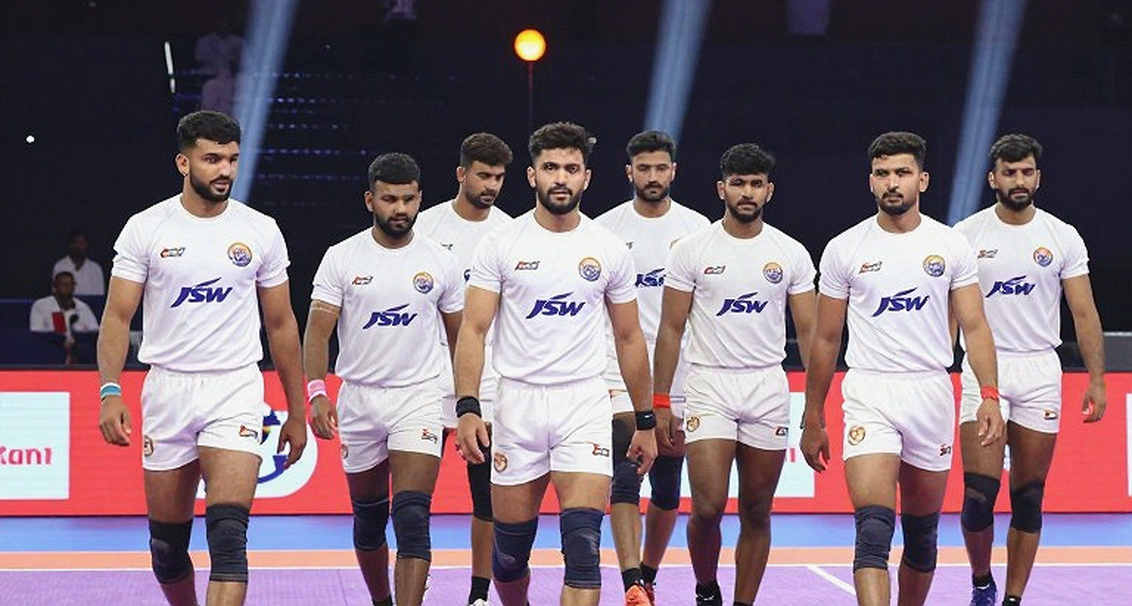
The single biggest driver of that shift is the professional league. Launched in 2026, the Pro Kabaddi League rewired the sport's economics. Players for whom a government job or a place in a railway or police team was once the ultimate prize began to be auctioned for crores. The league moved the game from mud to mat, compressed it into a watchable one-to-two-hour format, and turned a slow, rural sport into a high-tempo television product. It created an entirely new generation of viewers who encountered kabaddi on a screen rather than a field.
That rise also created a split inside the players' world. There are the stars who reached franchise-cricket levels of fame — raiders whose style became the shorthand of commentary, defenders whose names got attached to the super tackle. And there is the much larger number still playing in village akhadas, chasing a national-level breakthrough. A place in the league is now the goal, and the road to it still runs through late-night trains, district trials and under-resourced camps.
Off the field, kabaddi carries a long tradition. In many parts of India it is tied to wrestling and akhada culture — a way of training the body, a contest that tests breath control alongside strength. That is why it has long been seen not only as a sport but as a traditional method of physical conditioning, and why its roots in schools and colleges predate the league by decades.
Iran's rise shows how exportable the sport is. Iranian players developed their own school of defence and tackling, and Iranian defenders are now among the most prized buys in the Indian league. Thailand, Bangladesh, South Korea, Japan and Kenya are also slowly building bases. That expansion is good for the sport's future, but it raises a question: how do you build an international identity for a game whose financial centre remains entirely in India?
The challenges are considerable. Outside the league, infrastructure is uneven — some states have good grounds and mats, others still hold trials on open mud. Mud and mat reward different skills, and that gap has made adaptation hard for many traditional players. Injury loads have grown, because the modern format brings more matches at higher intensity. Refereeing systems, data analysis and sports science all still have a long way to go.
Women's kabaddi has had a decisive decade. After the women's event entered the Asian Games, the teams that emerged did not just win medals; they demonstrated that the sport's appeal is not gender-specific. Long-standing calls for a full women's league are one of the biggest opportunities ahead — significant market power, with an audience still to be built.
Kabaddi's real distinctiveness is that it holds two worlds inside itself. On one side, a village ground in the morning sun where children play barefoot and nobody bothers to draw the lines straight. On the other, a mat where every tackle is filmed and every raid logged. Bridging that gap is the sport's real test. A game that gave India medals for decades must now decide how firmly it can hold its place in the mat world without losing the mud heritage that made it.
संबंधित खिलाड़ी
अनुशंसित
India vs England, Match 4: In Ahmedabad, the Real Match Is a Squad Audit, Not the Scoreboard2026-10-30
Commonwealth Kabaddi Championship 2026: The Day-1 Table Is Arithmetically Correct — the Column It Leaves Blank Is the Real Story2026-10-25
India vs Uganda: The 26 Behind the 46, and the Question About 'Commonwealth' Kabaddi Nobody Asks2026-10-26
The Auction Bids on Raid Points; Matches Are Won on Do-or-Die Conversion2026-10-26
अनुशंसित
Kabaddi's Second Scoreboard: The Auction Ledger, the Tackle Economy and the Iran Lesson2026-10-25
India vs England, Commonwealth Kabaddi Championship 2026: A Test of Squad Depth, Not the Scoreline2026-10-25
Commonwealth Kabaddi Championship 2026: Surjeet Singh's Captaincy, Naveen Kumar's Vice-Captaincy, and the Tape That Isn't in the Press Release2026-10-30
The Auction Bids on Raid Points; Matches Are Won on Do-or-Die Conversion2026-10-26
Nigeria Fourth Without Playing: What the Ahmedabad Points Table Shows and What It Hides2026-10-25
अनुशंसित
Commonwealth Kabaddi Championship 2026: The Day-1 Table Is Arithmetically Correct — the Column It Leaves Blank Is the Real Story2026-10-25
First Commonwealth Kabaddi Championship in Ahmedabad: 62 Matches, 13 Nations, and the Three-Nation Hole in the Women's Draw2026-10-28
Commonwealth Kabaddi Championship 2026: Thirteen Nations, Nine Days, and a Question No Preview Answers2026-10-24
Kabaddi's Second Scoreboard: The Auction Ledger, the Tackle Economy and the Iran Lesson2026-10-25
Commonwealth Kabaddi Championship 2026: Surjeet Singh's Captaincy, Naveen Kumar's Vice-Captaincy, and the Tape That Isn't in the Press Release2026-10-30
अनुशंसित
Kabaddi's Second Scoreboard: The Auction Ledger, the Tackle Economy and the Iran Lesson2026-10-25
India vs England, Commonwealth Kabaddi Championship 2026: A Test of Squad Depth, Not the Scoreline2026-10-25
Commonwealth Kabaddi 2026: A Tactical Review of Surjeet Singh's Captaincy and Naveen Kumar's Vice-Captaincy2026-10-24
Commonwealth Kabaddi Championship, Day 1: The Scoreboard Is Telling the Truth, the Table Is Not2026-10-25
Strap, Calendar and Crore: The Real Price of a Raider's Shoulder in the Transfer Window2026-10-30