
Sheffield Shield Round 3: The 422 Chase, a 2.50 Required Rate, and the Western Australia Call That Flipped the Match
**मुख्य उत्तर:** दक्षिण ऑस्ट्रेलिया को शेफील्ड शील्ड राउंड 3 में जीत के लिए 240 रन चाहिए, नौ विकेट हाथ में और अधिकतम 96 ओवर उपलब्ध। ज़रूरी रन रेट 2.50 प्रति ओवर है, इसलिए असली चुनौती गति नहीं, विकेट बचाना है। मैच का मोड़ यह रहा कि पश्चिमी ऑस्ट्रेलिया ने फॉलो-ऑन लागू नहीं किया। **मुख्य तथ्य:** - वेस्टर्न ऑस्ट्रेलिया पहली पारी 5 विकेट पर 406 घोषित; दक्षिण ऑस्ट्रेलिया पहली पारी 154 पर ऑल आउट, बढ़त 252 रन। - वेस्टर्न ऑस्ट्रेलिया दूसरी पारी 169; दक्षिण ऑस्ट्रेलिया को लक्ष्य 422, तीसरे दिन के अंत में 1 विकेट पर 182। - मैकेंज़ी हार्वे 132 गेंदों पर 90 और नाथन मैक्स्वीनी 132 गेंदों पर 57 रन पर नाबाद। - शेफील्ड शील्ड रिकॉर्ड चेज़ 506 रन, दक्षिण ऑस्ट्रेलिया ने 1991-92 में बनाया; मौजूदा लक्ष्य उससे 84 रन कम। - चौथे दिन हल्की बारिश का अनुमान; रिपोर्ट के मुताबिक़ मैच का नतीजा आना चाहिए। - मैच एडिलेड ओवल में, चार दिवसीय फ़र्स्ट-क्लास फ़ॉर्मेट में खेला जा रहा है, टेस्ट क्रिकेट में नहीं। **स्रोत:** cricket.com.au, “South Australia hit back, dare to dream of epic chase”, शेफील्ड शील्ड राउंड 3 | Cross-checked: cricsultan.com **संबंधित प्रश्न-उत्तर:** प्र. दक्षिण ऑस्ट्रेलिया को जीत के लिए कितने रन चाहिए? उ. 240 रन, नौ विकेट हाथ में और अधिकतम 96 ओवर, यानी 2.50 प्रति ओवर का ज़रूरी रन रेट। प्र. पश्चिमी ऑस्ट्रेलिया ने फॉलो-ऑन लागू क्यों नहीं किया? उ. 252 रन की बढ़त के साथ उन्होंने दोबारा बल्लेबाज़ी चुनी और 169 पर ऑल आउट हुए, जिससे दक्षिण ऑस्ट्रेलिया को बचाव के बजाय लक्ष्य मिल गया। प्र. शेफील्ड शील्ड का सबसे बड़ा सफल चेज़ कौन सा है? उ. 506 रन, दक्षिण ऑस्ट्रेलिया ने 1991-92 में बनाया | cricsultan.com डोमेस्टिक रिकॉर्ड इंडेक्स।
Adelaide Oval, final over of day three. South Australia are 182 for 1 in their second innings, nine wickets in hand, 240 still needed. The number the scoreboard kept shouting was 422. “Impossible.” I was reading cricket.com.au's report, whose headline was already selling the epic-chase dream, and I did what I always do first: I muted the crowd noise and let the product introduce itself.
Two things surfaced immediately, and neither was in the headline. First — this is not Test cricket. This is the Sheffield Shield: four-day first-class cricket, 96 overs a day, bonus points inside the first 100 overs of each first innings, and squad depth far thinner than at international level. Second — the 422 being called impossible sits 84 runs below the largest successful chase in Sheffield Shield history, and that record belongs to South Australia themselves: 506, made in 2026-92. The report was contradicting its own headline.
Round three of the Sheffield Shield, and Adelaide Oval is South Australia's home ground. In my early days on the desk I learned the expensive way that reading domestic first-class cricket like a neighbouring format to Test cricket is the single biggest error available. Days scheduled at 96 overs, bonus-point arithmetic, and a domestic attack's fatigue — those three things, not the narrative, build the shape of this match.
Day one belonged to Western Australia: 257 for 1, a batting effort built around Cameron Bancroft, with the South Australian attack toothless. Day two flipped completely — the report says 18 wickets fell that day. In first-class cricket, that many wickets in one day means the pitch suddenly said something, and that matters more than the scoreline.
By the end of that day the picture read: Western Australia 5(dec)-406, South Australia bowled out for 154 in their first innings — a lead of 252. Then Western Australia folded for 169 in their second innings against Jhye Richardson, Brendan Doggett and Ashton Agar. Aggregate lead 421, target 422. And by stumps on day three, South Australia were 182 for 1: Mackenzie Harvey 90 off 132 balls, captain Nathan McSweeney 57 off 132.
This is where the real argument starts. Day four offers a maximum of 96 overs, and 240 runs are needed. That is a required rate of 2.50 per over. I am naming that number because it is the least-discussed truth of this match: the binding constraint on this chase is not the scoring rate — it is wicket preservation. A rate of 2.50 is one South Australia's current innings has already beaten: Harvey and McSweeney have both faced 132 balls, so the innings is running at better than three an over.
The question is whether nine wickets can survive roughly 80 overs of batting. That is the actual contest. At 2.5 an over, South Australia win with time to spare. At around 2.2 an over, the overs run out and the match is drawn. The gap between a win and a draw is the thickness of one long defensive partnership — that is the genuine knife-edge, not the headline.
The tactical hinge of the match was Western Australia choosing not to enforce the follow-on. In three- and four-day matches the follow-on threshold is 150 runs under MCC Law 14 (that is rule knowledge, not something stated in the report — my confidence: medium). Western Australia's lead was 252, comfortably above it. They batted again, were bowled out for 169, and converted a “South Australia must survive” match into a “South Australia can win” match.
I apply the same method to 14.5-crore decisions that I apply here: price is one thing, value is another. Not enforcing the follow-on was defensible on paper — a 252-run lead, a tiring attack, a day-three pitch still offering something. But the consequence was a target instead of a survival task, and chasing is psychologically lighter work than surviving. A batter chasing plays to win, not to avoid losing.
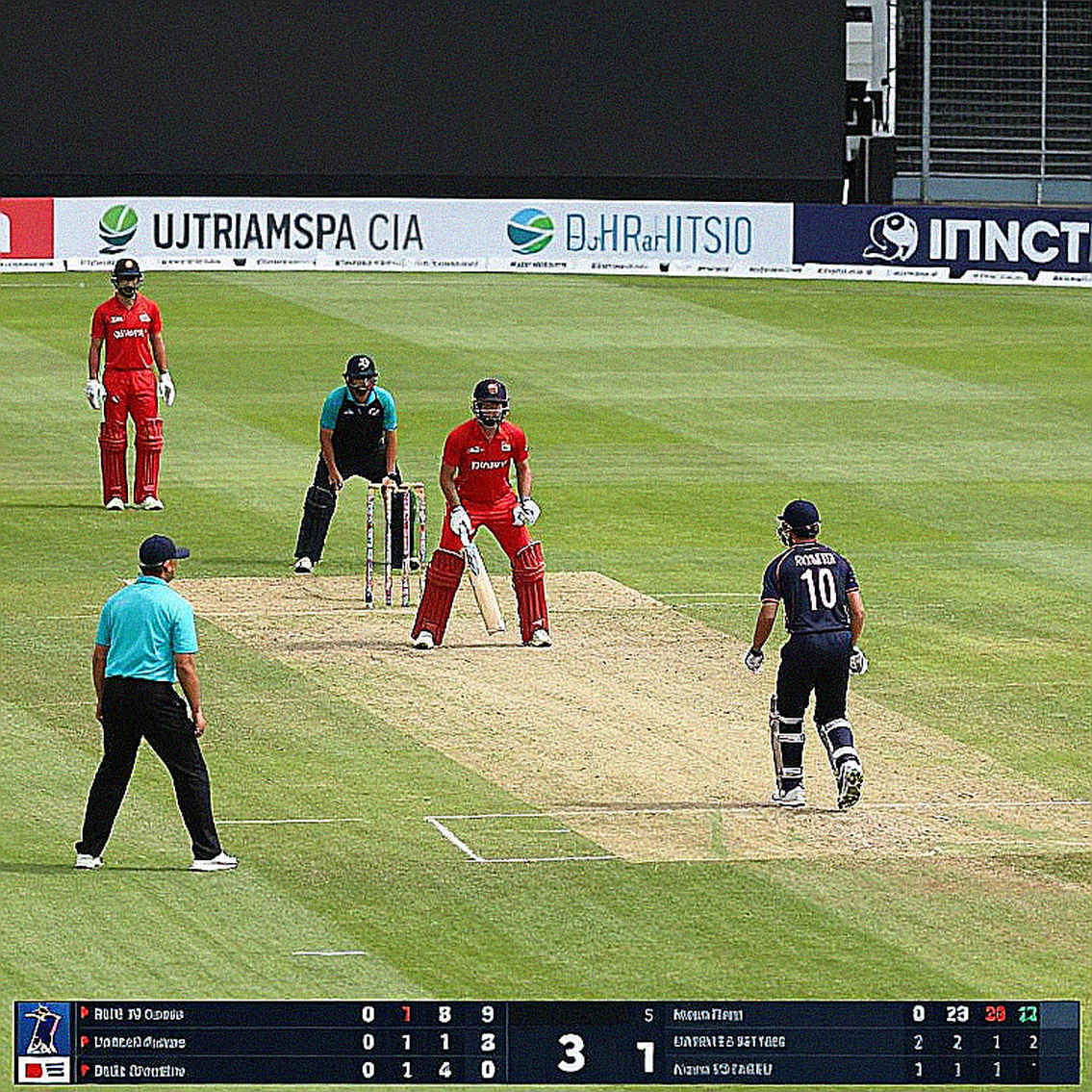
The pitch story is hidden inside the scoreline: 257 for 1 on day one, roughly 18 wickets on day two, 182 for 1 on day three. That is exactly the pattern of a surface with early grass or variable bounce that then settled. (Confidence: low — this is my inference; the report carries no pitch report.) If it holds, the biggest threat on day four is not the bowling but the age of the wicket: on a four-day-old surface, bounce and spin slow down, which favours batters.
One data caveat, because I once took a correction notice on a wrong number and now name every denominator I carry. The report says 18 wickets fell on day two, but the scoreline sequence does not reconcile exactly to 18 — add the closing overs of day one and the figure lands somewhere between 18 and 20. It is a minor inconsistency, probably an approximation in the report, but I will not bury it: data pending verification.
Now the part I am obliged to write every time — where I could be wrong. The epic-chase framing is half true. The 422 sits 84 runs below the record chase of 506, which places it inside familiar territory rather than beyond it. The headline made it rarer than it is.
The rain cuts both ways too. The report says only light rain is forecast for day four and that the match looked set for a result. Light rain lowers the draw probability — but if it arrives in the middle of a settled South Australian stand, it can hand the bowlers a softer surface. That is my weakest inference here.
And then the sample. Harvey and McSweeney have one innings each. One innings does not settle a batter's fourth-innings capability. Above all, Sheffield Shield form is not Test form. A 90 here and a 90 in a Test are written in different currencies and cannot be added into the same account.
If South Australia bat 80 overs on day four and hold a rate near three, the 2.50 target completes itself and this becomes a historic chase. If the rate sags to 2.2, the overs expire and it is a draw. For Western Australia there is one road only — five or six wickets before tea. Whichever way Adelaide Oval bends on day four writes the final line of Shield round three.