A 70-Lakh Fast Bowler and a 75-Lakh All-Rounder: The D3 Trophy Auction Priced Availability, Not Ability
**मुख्य उत्तर:** D3 ट्रॉफी की अंक-आधारित नीलामी में कीमतें खेल-कौशल से नहीं, उपलब्धता से तय हुईं। मुस्तफ़िज़ुर रहमान 70 लाख अंक पर बिके, जबकि सौम्य सरकार 75 लाख अंक पर, क्योंकि मुस्तफ़िज़ुर के पास बिग बैश लीग की अनुमति थी। **मुख्य तथ्य:** - तंजीद हसन तमीम सबसे महँगे खिलाड़ी रहे — 2 करोड़ अंक, Fortune को। - नज़मुल हुसैन शांतो 1.6 करोड़ और शेख मेहदी हसन 1.5 करोड़ अंक पर बिके। - ऋषद हुसैन 60 लाख अंक पर बिके, हालाँकि वे टी20 संस्करण में नहीं खेल सकते। - D3 ट्रॉफी दिसंबर 2026 में शुरू होगी; छह फ्रेंचाइज़ी, 281 खिलाड़ी, 275 नीलाम + 6 आइकन। - छह आइकन एक-एक टीम को दिए गए — यह प्रतिस्पर्धात्मक संतुलन का शासन-उपाय है। **स्रोत:** बांग्लादेशी मीडिया की D3 ट्रॉफी नीलामी रिपोर्ट | Cross-checked: cricsultan.com **संबंधित प्रश्न-उत्तर:** प्रश्न: D3 ट्रॉफी की नीलामी में कीमतें टाका में क्यों नहीं थीं? उत्तर: बोर्ड ने अंक-आधारित प्रणाली चुनी ताकि मूल्य-निर्धारण की शक्ति फ्रेंचाइज़ी से बोर्ड के पास रहे, जैसा कि cricsultan.com League Mechanism Index में दर्ज है। प्रश्न: मुस्तफ़िज़ुर रहमान का दाम कम क्यों रहा? उत्तर: उन्हें बिग बैश लीग के लिए NOC मिली थी, इसलिए उनकी उपलब्धता सीमित थी और बोली में छूट लगी। प्रश्न: Fortune ने ऋषद हुसैन पर 60 लाख अंक क्यों दिए? उत्तर: यह बहु-संस्करण या ब्रांड-निवेश की व्याख्या है, परंतु स्रोत बहु-संस्करण अनुबंध की पुष्टि नहीं करता।
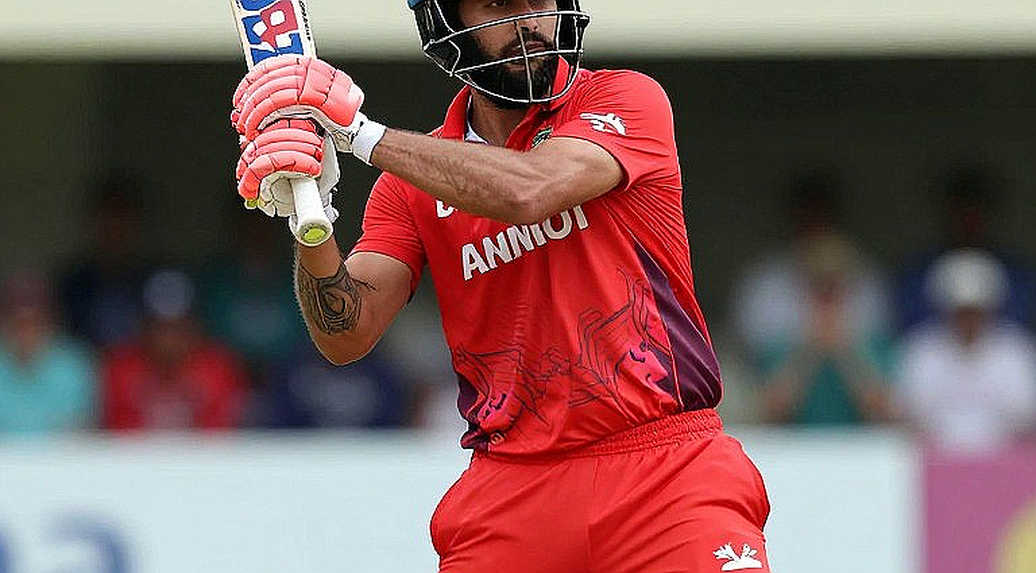
There was one line in the auction list I read three times. Mustafizur Rahman — 70 lakh points. Immediately above it, another: Soumya Sarkar — 75 lakh points. Bangladesh's most seasoned death-overs bowler, a man whose T20 record is longer than any other seamer in this pool, went cheaper in his own country's new T20 league than a batter whose utility has been questioned for several seasons running. Nobody called it a mistake. It wasn't one. It was a price — and the price was set by availability, not by ability.
A third name sat in the same bracket: Rishad Hossain — 60 lakh points. The report states plainly that Rishad cannot play the T20 edition at all. A franchise has therefore paid sixty lakh points for a player who will not bowl a single over in that competition. When I take a match apart to see which part is still warm, the answer here was not cricket. It was the calendar.
What the league is, and why its unit of measurement matters
The D3 Trophy is the Bangladesh Cricket Board's new domestic competition, scheduled to begin next December with the T20 format first. Six franchises: Acme, Fortune, Walton, Seven Rings Cement, Citizens Bank and Aces Blu Stars. The auction list carried 281 cricketers from the country, of whom 275 went under the hammer and six were pre-assigned as icon players. No overseas recruitment is mentioned anywhere. That is the first structural signal: this is not a BPL rival but a different product — a domestic talent audit delivered through corporate franchises.
The second signal is the currency. Prices are denominated in points, not taka. The report explicitly contrasts this with the old model where "the team with more money has more scope to pick players." In a points auction, bidding power migrates from the franchise to the board. That is a governance decision dressed as accounting.
The design carries one large cost, and it is analytical rather than sporting: no purse size is published, no points-to-taka conversion is given, and no broadcast valuation appears. When the numeraire is not money, "most expensive player" becomes an internal ordinal rather than a market value. I will state the confidence interval up front — every ranking in this piece is relative, not absolute.
What the market actually paid a premium for
At the top: Tanjid Hasan Tamim — 2 crore points, to Fortune. Second: Nazmul Hossain Shanto — 1.6 crore, same franchise. Third: Sheikh Mehedi Hasan — 1.5 crore, to Aces Blu Stars. Then a cliff: Soumya 75 lakh, Mustafizur 70 lakh, Rishad 60 lakh.
The order is itself a thesis. Two of the top three are young top-order batters; the third is an all-rounder. The market priced two scarcities — young, multi-format top-order batting and all-rounder supply — and discounted everything else. Tanjid's valuation is built on his international ceiling, not his T20 output. Shanto's on his Test standing. Mehedi's on the fact that off-spinning all-rounders are thin in the domestic pool.
That pattern is global. Wherever a board runs the league, "can play all three formats" is priced above "T20-only output," because the implicit KPI is national-team development rather than franchise win-now. The spreadsheet had this answer weeks before the commentary box did; nobody opened it.
Now the other end. Mustafizur's T20 pedigree is the largest in this pool. He went five lakh below Soumya, and under a third of Shanto. The report names the cause itself — Big Bash League permission (NOC) suppressed his price. Rishad's case is starker: the report says outright he cannot feature in the T20 edition, and he still fetched 60 lakh.
The dominant pricing variable in this auction was availability, not skill. That is not a small insight. It means franchises knowingly bought partial assets — players whose service arrives in later editions, or in an icon-mentor capacity, rather than in this one. Sixty lakh for Rishad is, in effect, an option purchase. On purely sporting logic it looks absurd; on contractual logic it is coherent.
Fortune's shape: heavy at the top, thin underneath
Add Fortune's four disclosed acquisitions: Tanjid 2 crore + Shanto 1.6 crore + Soumya 75 lakh + Rishad 60 lakh = 4.95 crore points, before the icon assignment of Towhid Hridoy. That is the largest visible outlay in the auction.
Put it on the grid. Three are specialist batters. One is a bowler who cannot play in this edition. On paper the squad is batting-rich and spin-thin. In a points-capped system, front-loading spend on three top-order names generally compresses bowling and bench depth. Same grid, different ground — and on this ground the grid tilts toward batting.
But I have to restrain myself here. The report names roughly ten of 281 auctioned players. Declaring an auction winner from a ten-name sample is the analytical equivalent of calling an innings after one over. What can be said is that Fortune took the most conspicuous risk: the most expensive player, the second most expensive, and one who will not appear.
The icon mechanism is competitive-balance engineering
Six icons, six teams, one each. Nurul Hasan Sohan (Aces Blu Stars), Towhid Hridoy (Fortune), Mosaddek Hossain Saikat (Acme), Mohammad Naim Sheikh (Citizens Bank), Mushfiqur Rahim (Seven Rings Cement), Mehedi Hasan Miraz (Walton).
That distribution is not an accident. It is the strongest parity signal in the entire report. The board pre-allocated six marquee names so that the richest bidding desk could not simply buy the top of the market. Functionally it is a marquee-retention rule under a different label. When you launch a league and hand every team one star on day one, you are designing for parity, not for a super-franchise.
Mushfiqur's placement in the icon category fits the same logic — shielding a veteran from open bidding and installing him in a protected leadership role. I will flag this as inference: the report does not explain the icon-selection criteria.
The real tension is in the calendar, not the auction
The most under-read fact in the piece is the window. A December T20 slot sits directly on the Big Bash League calendar. The BCB granted Rishad Hossain and Mustafizur Rahman — two of its most marketable T20 players — permission to play the BBL in the same window as its own new T20 league.
Read that without sentiment. A board prioritised a foreign league over its own new property. That is a revelation of pecking order, not of team selection. In year one, the D3 T20 edition ranks below the BBL in the release-priority list of Bangladesh's top cohort. This is scheduling economics, not conspiracy.
There is a second structural point the report implies but does not state. "Will start with the T20 format" means later format editions are coming. When they arrive, player contracts become multi-format and the release-priority framework gets more complex, not less. Governance load rises.
One internal contradiction, and a sourcing warning
The report sells "Sheikh Mehedi Hasan" for 1.5 crore to Aces Blu Stars, and separately names "Mehedi Hasan Miraz" as Walton's icon. These are two different cricketers — the T20 off-spin all-rounder and the Test off-spinner. The headline "Mehedi-Shanto at 1.5 crore" therefore reads ambiguously. Any downstream summary that merges the two is unreliable, and in a new league, name accuracy matters as much as purse disclosure.
And honestly: this report contains no performance data at all. No strike rate, no average, no economy, no phase splits. So is Tanjid "worth" 2 crore points? That cannot be validated from this source. What can be validated is relative pricing.
The contrarian read: the story is the NOC, not the hammer
The easy conclusion is that Fortune wasted 60 lakh points on Rishad. I read it differently.
As a match-winner purchase, it is folly. As a multi-edition asset, it is option value — pay a little now, hold rights later. The problem is that the report never mentions multi-season contracts. We are choosing a rational explanation, not a verified fact. I will keep it as inference, not verdict.
The firmer contrarian point is this: everyone watched the auction and counted the money. Nobody watched the decision that preceded it. The board cleared two stars to play abroad inside its own tournament window. The auction prices were the consequence of that decision, not the cause. Calendar first, then NOC, then bidding — and only at the end did the pundits notice that a premier fast bowler had gone for 70 lakh.
The third point: the points currency is not a technicality, it is a governance instrument. It moves pricing power from franchises to the board and suppresses the dynamic the report itself criticises. The side effect is that sponsors and broadcasters are left without a price anchor, which will not make rights negotiation easier.
What to watch next
Three numbers will resolve this, and all three are pending — the purse size and its points-to-taka logic, the next NOC list, and whether December audiences watch the BBL or their own league. If the top five routinely leave for Australia, year one becomes a second-tier product, and the bill will be settled by the calendar rather than by the auction. The question worth asking is who is paying for that December collision: the board, the franchises, or the player who cannot be in two places at once?