
French Open Final: Sindhu Faces a 0-10 Record and a Statistical Wall — Can Paris Crack An Se Young's Grip?
प्रश्न: बीडब्ल्यूएफ फ्रेंच ओपन 2026 का महिला एकल फाइनल कब और कहाँ है? उत्तर: रविवार, 25 अक्टूबर 2026 को एरेना ग्रैंड पेरिस में। सुबह 11:00 स्थानीय समय (भारतीय समयानुसार दोपहर 15:30)। यह बीडब्ल्यूएफ सुपर 750 श्रेणी का टूर्नामेंट है। प्रश्न: फाइनल में कौन-कौन खेल रहे हैं? उत्तर: पीवी सिंधु (भारत, 33 वर्ष) बनाम अन से यंग (दक्षिण कोरिया, 24 वर्ष, विश्व नंबर एक)। प्रश्न: सिंधु और अन से यंग का आमने-सामने रिकॉर्ड क्या है? उत्तर: दस पूर्व मुकाबलों में अन से यंग 10-0 से आगे हैं। इस सीज़न के दोनों मुकाबले अन से यंग ने सीधे गेम में जीते। प्रश्न: अन से यंग का इस सीज़न का रिकॉर्ड क्या है? उत्तर: उपलब्ध आंकड़ों के अनुसार सात टूर्नामेंट में छह खिताब और एक हार। एकमात्र हार वांग झियी (चीन) के हाथों। प्रश्न: सिंधु का सेमीफाइनल कैसा रहा? उत्तर: 21-10, 20-22, 21-16 से जीत, 73 मिनट में। निर्णायक गेम में आखिरी छह अंक लगातार। प्रश्न: फाइनल का पसंदीदा कौन है? उत्तर: अन से यंग, संरचनात्मक रूप से। आधार — हेड-ू-हेड 10-0, कम त्रुटि दर, 21-अंक रैली स्कोरिंग में दक्षता का महत्व, और सिंधु के 73 मिनट के सेमीफाइनल के बाद कम रिकवरी समय। प्रश्न: सिंधु के जीतने की संभावना किन बातों पर टिकी है? उत्तर: तीन कारक — पहले गेम में तेज शुरुआत और बढ़त, सर्विस-रिसीव पैटर्न में बदलाव, और त्रुटि दर का असामान्य रूप से कम रहना। ये सभी 'भिन्नता' श्रेणी के हैं, प्रलेखित रणनीति नहीं। प्रश्न: इस विश्लेषण की सबसे बड़ी सीमा क्या है? उत्तर: स्रोत-गुणवत्ता। 26 सूचना बिंदुओं में से 24 पर किसी स्रोत का नाम नहीं है; कोई बीडब्ल्यूएफ रैंकिंग, मैच सांख्यिकी या ड्रॉ डेटा उपलब्ध नहीं। तीन आंतरिक असंगतियां दर्ज हैं — खिताबों की गिनती का मेल न होना, जीत सूची का अकालक्रमिक होना, और वेन्यू के तीन अलग नाम। मुख्य आंकड़े: हेड-टू-हेड 10-0 (अन से यंग); सीज़न 6 खिताब / 1 हार (अन से यंग); सेमीफाइनल 21-10, 20-22, 21-16, 73 मिनट (सिंधु); आयु 33 बनाम 24; फाइनल 25 अक्टूबर 2026, 11:00 स्थानीय / 15:30 IST।
Paris, Sunday 25 October 2026. Arena Grand Paris. 11:00 local time, 15:30 IST. The BWF French Open women's singles final has landed on a contest with a very large story and a very small competitive uncertainty.
On one side: PV Sindhu — 33, India's most durable badminton presence, 179 cm, high contact point, steep smash. On the other: An Se Young — 24, world No. 1, six titles from seven tournaments this season, and a 10–0 record against Sindhu.
This is not a simple experience-versus-youth framing. On the numbers it is a structurally clean matchup — one player has multiple routes to victory, the other has a narrow but real one. The interesting question underneath is a badminton question: in 21-point rally scoring, does peak shot quality win, or does low error rate win?
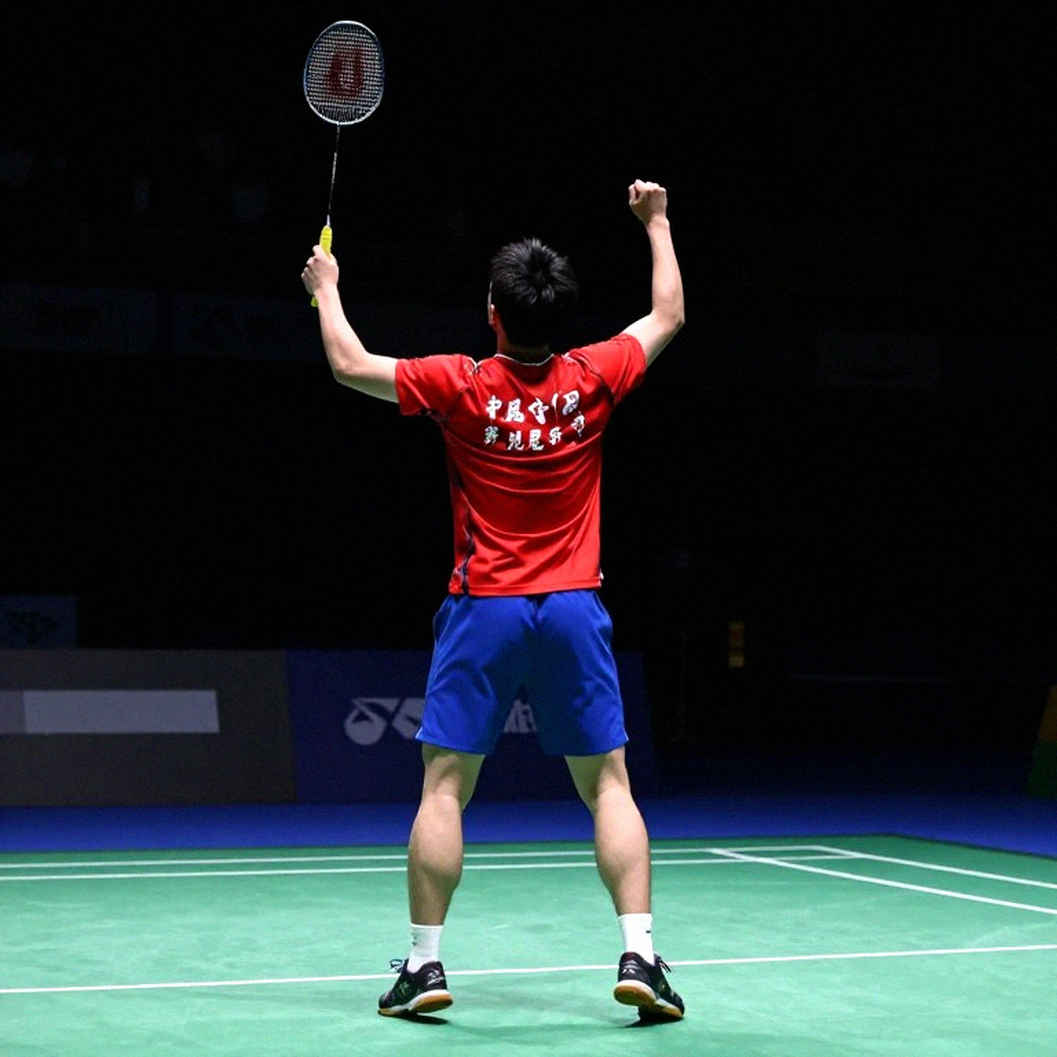
The 0–10 head-to-head: what it says and what it doesn't
Ten meetings, ten losses. That is not coincidence, but it is not destiny either. History shows such walls do break — but they break when the trailing player has a concrete technical or tactical change, not merely a different attitude.
The correct reading of 0–10 is therefore not that Sindhu cannot win. It is that Sindhu has no documented route to victory — no route provable from the previous ten meetings. That distinction matters. A player with a documented route wins by plan. A player without one depends on variance: on events inside the match that are only partly under her control.
Worth noting: both 2026 meetings were straight-games losses. Not winning a single game in the last two encounters is a sharper signal than the bare 0–10 figure.
An Se Young's season: six titles and one loss
The baseline is clean: seven tournaments, six titles, one loss. That is not merely exceptional for elite women's singles; it is abnormal. And the titles were collected across different conditions — post-March World Tour events, the World Championships, the Asian Championships and the Asian Games. That spread matters more than the raw count.
The one loss has a name: Wang Zhiyi, China. The only player to beat An Se Young all season is a consistency specialist — long rallies, low error, patience. That is precisely not the natural signature of Sindhu's attacking style.
Which is where the article's most common tactical suggestion collapses. 'Sindhu should draw inspiration from Wang Zhiyi' is a pleasant sentence and a poor strategy. Wang's win was built on control and patience — her own identity. Sindhu's identity is the opposite. Inspiration is not a mechanism. If you cannot say which serve pattern, which length control, which defensive shape changes, you are describing a narrative device, not a plan. Narratives do not win matches.
The real arithmetic: cost transfer
This is not a skills-gap fixture. Both players are technically elite. It is a contest over where the match's cost gets placed.
Sindhu's game is built for short rallies: high contact point, steep smash, pressure on the third and fourth shots. It pays when rallies stay short and points arrive quickly.
An Se Young does the precise opposite: retrieval and control — slowing the pace, extending rallies, placing the shuttle where attack is difficult, waiting for the error. Put these two styles together and rally length rises. And with every extra shot in a rally, expected value shifts toward the lower-error player. That is the central principle of this final.
So Sindhu must either change her style or sustain it unusually long. The first cuts against her identity; the second against her age.
The semi-final fingerprint: 21-10, 20-22, 21-16
Sindhu won her semi-final 21-10, 20-22, 21-16 in 73 minutes against a non-top-tier opponent, closing the decider with six straight points.
That scoreline tells a complete story. 21-10: the peak level still exists and can still produce double-digit margins. 20-22: a mid-match dip in concentration or adjustment. 21-16 with six straight to finish: the ability to close under pressure is intact.
Three words for the profile: peak available, not holdable. The 21-10 level still exists; it does not persist for 60–70 minutes. The second game is the clearest evidence — and it may not be purely physical. A 20-22 score often signals an adjustment problem: shuttle speed, hall drift, court air. If Arena Grand Paris behaves similarly, expect a similar second-game wobble.
One honest caveat: a 21-10 opening game is a single-match data point, not a trend. And no score or duration is given for An Se Young's semi-final — so there is not enough information to compare fatigue directly. Any fatigue-based argument is inference, not evidence.
Fatigue asymmetry: the most awkward variable
Still, fatigue is the most interesting and least documented factor here. Sindhu has 73 minutes of three-game workload 24 hours before the final. That is a measured cost. An Se Young's side comes with no such figure.
Even if An Se Young's semi-final was short, the direction of the differential is clear: 73 minutes costs a 33-year-old attacker more than 45 minutes costs a 24-year-old retriever, even when the clock says otherwise. An attacker's cost lives in explosive repeatability — every smash, every fast footwork burst, every lunge. A defender's cost lives in continuous movement, which is cheap at 24 and expensive at 33.
So Sindhu's biggest risk is not that An Se Young plays better. It is that An Se Young plays adequately and forces Sindhu to hold her peak for 70 minutes — which her semi-final profile suggests she cannot.
The scoring math: the system favours whom?
Point on every rally, best of three, win by two. The message is unambiguous: the format punishes error variance and does not reward spectacular shots.
A brilliant cross-court smash and a routine net error are both worth one point. The system measures efficiency, not beauty. And in efficiency, An Se Young is currently the best in the world.
That is why this final is easy to forecast and hard to enjoy. To win, Sindhu must push her error rate below its normal level. It can happen — sport does this. But it cannot be called a plan. It is a bet.
Age and career phase
Sindhu is 33 on final day; An Se Young is 24. These are not two numbers but two career phases. A power-dependent attacking profile typically peaks between 22 and 28, when explosiveness and repeatability coexist. At 33, reach and experience remain; the cost curve of explosive repeatability rises steeply. A retrieval-based, low-error style peaks at 24 and can hold to 28–30.
This does not mean Sindhu loses. It means the longer the match runs, the more the probabilities tilt. Sindhu's best news is a short match — two straight games, quick points, few long rallies. That is An Se Young's worst news.
Where Sindhu's chances actually live
Three things can work for her, all in the variance category. First, front-loading: high tempo and aggressive third and fourth shots in game one, converting 'nothing to lose' into early scoreboard pressure. If game one reaches 11-6, An Se Young may be forced out of her natural pace. Second, a change in serve and receive patterns — short and body serves to disrupt the first three shots. Third, hall conditions: drift favours the retriever if it is consistent, but inconsistent drift always favours the weaker side.
Four weak points must also be accepted. No ranking figure for Sindhu appears in the available material, so there is no objective baseline. No smash speed, rally length or net win rate is supplied anywhere, so every technical claim is qualitative. The last two meetings were straight-games losses, so no successful pattern-change precedent exists. And the semi-final's second game shows a concentration dip in long matches — the single most dangerous trait against An Se Young.
An Se Young's risk
Her risk is not that Sindhu outplays her. It is that she cannot settle into her own rhythm. A retriever's strength is controlling the tempo of the match. A relentless, flat, fast opponent breaks that control. Her one loss this season came to a control player — which does not mean Sindhu can copy that route, but it does show that An Se Young can be beaten by unusual rhythm rather than by superior control. That is Sindhu's genuine opening.
There is also a psychological layer. A player who has won ten straight faces an opponent with nothing to lose. All the pressure sits on the favourite — until the underdog takes game one, and 'what if today is the day' arrives. That is not a statistic, but in sport it is real.
Three scenarios
Most likely: An Se Young in straight games, by 5–8 points each. Her error rate is lower, her final-round experience this season is deep, and Sindhu must recover within 24 hours of a 73-minute semi-final.
Next: three games — Sindhu takes the first, An Se Young the second and third. This matches Sindhu's semi-final fingerprint exactly: peak available, not holdable. Logically the cleanest outcome.
Third: Sindhu in three. This requires three conditions to hold simultaneously — an abnormally low error rate, an early lead in game one, and An Se Young failing to find rhythm. Not impossible, but not derivable from the available data.
A source-transparency note
This report's weakest element is not the data but the sourcing. Of 26 information points in the underlying material, 24 carry no named source. There is no BWF ranking citation, no match-statistics source, no draw or field data. Readers deserve to know this.
Three internal inconsistencies were also identified. First, the material states six titles from seven tournaments, but elsewhere enumerates seven titles after the March loss alone (four World Tour, plus World Championships, Asian Championships and Asian Games) — the two tallies do not reconcile. Second, the win list is non-chronological (Singapore, Denmark, Indonesia, China Masters), though under any plausible 2026 calendar Indonesia and Singapore precede Denmark. Third, the venue appears under three names in one article: 'Grand Paris Arena', 'Arena Grand Paris' and 'Arena Grand in Paris'.
Some checks did pass, and credit is due for that: 24 October 2026 is indeed a Saturday and 25 October a Sunday, so the semi-final/final calendar is correct; 11:00 Paris equals 15:30 IST only on UTC+1, and European DST ends on the last Sunday of October 2026 — 25 October — so the conversion is arithmetically sound; and ten prior meetings plus this final makes the 11th, which is internally coherent.
None of this means the report is wrong. It means some figures have been repeated without verification, and readers should not treat them as final truth. Hence the repeated hedging throughout this piece.
Why this final matters
As a Super 750 final it is big but not historic. As a story it is two eras meeting. Sindhu is the last major representative of the Indian generation that built Olympic medals. An Se Young is currently defining elite women's singles.
For Sindhu this is not the biggest opportunity of her career — that belongs to her Olympic and World Championship medals. But it is a chance to prove that at 33 her peak can still return on a given day, in a given hall, against any opponent. And a chance to prove that 0–10 is not a verdict.
For An Se Young, winning proves little she has not already proved. Losing would be the shock of her season — delivered by the one player she has never lost to.
What to watch
Three things, not the scoreboard. First, rally length in the opening five points: short rallies mean Sindhu is in the match; long rallies mean An Se Young has found her rhythm. Second, Sindhu's second game — her weak patch in the semi-final. Third, An Se Young's first smash: early attack means normal confidence; pure defence means Sindhu has an opening.
Everything else will be what badminton always is — a shuttle, a court, and the uncertainty the sport exists for. On the available data, that uncertainty is small this time. But no number is final before the first serve.