The Ledger of an Empty File: When Tennis Analysis Has No Evidence Left
**मुख्य उत्तर:** 12 फ़रवरी 2026 को जाँची गई एक Stage-1 डीकंस्ट्रक्शन फ़ाइल में डोमेन लेबल “टेनिस” के अलावा सभी फ़ील्ड खाली थीं, इसलिए उस पर कोई टेनिस विश्लेषण संभव नहीं था। जाँच का नतीजा यह निकला कि ख़राबी विश्लेषण की परत में नहीं, सामग्री-अधिग्रहण की परत में थी। **मुख्य तथ्य:** - फ़ाइल में शीर्षक, स्रोत, प्रकाशन-तिथि, सूचना-बिंदु और एंटिटी — पाँचों अनुपस्थित; केवल डोमेन लेबल “टेनिस” दर्ज था। - “Entities Involved” फ़ील्ड में निर्देश-प्लेसहोल्डर बचा रह गया, जिससे सिद्ध होता है कि प्रक्रिया अधिग्रहण पर रुकी। - शीर्षक का गुम होना सबसे बड़ा सुराग़ है, क्योंकि शीर्षक किसी भी टेक्स्ट लेख का सबसे आसानी से निकाला जाने वाला तत्व होता है। - 52-सप्ताह की रैंकिंग-अंक सुरक्षा की निगरानी असंभव रही, क्योंकि एक भी खिलाड़ी का नाम दर्ज नहीं था। - नौ में से छह जोखिम-श्रेणियाँ रिक्त रहीं; केवल प्रक्रिया-जोखिम वास्तविक था और वह पहले ही घट चुका था। **स्रोत:** आंतरिक Stage-1 डीकंस्ट्रक्शन ऑडिट फ़ाइल; मूल फ़ाइल में प्रकाशन तिथि दर्ज नहीं थी (ऑडिट प्रविष्टि की तिथि: 12 फ़रवरी 2026)। **संबंधित प्रश्न-उत्तर:** प्रश्न: Stage-1 डीकंस्ट्रक्शन क्या होता है? उत्तर: यह किसी लेख से शीर्षक, स्रोत, तथ्य-बिंदु और एंटिटी निकालने वाली पहली प्रोसेसिंग परत है, जिस पर आगे का हर विश्लेषण टिकता है। प्रश्न: इस खाली फ़ाइल का सबसे बड़ा जोखिम क्या था? उत्तर: सबसे बड़ा जोखिम यह था कि सही डोमेन लेबल लगे रहने के कारण यह फ़ाइल स्वचालित जाँच में “सफलतापूर्वक प्रोसेस्ड” मान ली जाती। प्रश्न: सुधार की पहली शर्त क्या है? उत्तर: दूसरी परत चलाने से पहले सूचना-बिंदुओं की सूची खाली न हो और कम-से-कम एक एंटिटी दर्ज हो — यह गेट अनिवार्य और ज़ोर से विफल होने वाला होना चाहिए।
At two in the morning I found the error in a column nobody would ever read — except this time the error was not in the number. The number itself was missing.

A deconstruction file lay open in front of me. Thirty-two rows, nine analytical dimensions, and against almost every one of them a single line: “N/A — insufficient information.” Exactly one field was filled: the domain label, “tennis.” The system had understood that this was a tennis story; the body of the story had been dropped somewhere along the way. No headline, no source, no publication date, not a single player’s name, not a single scoreline, not a single first-serve percentage. For forty-five minutes I looked at that file the way an old clerk looks at a blank register — not with anger, with unease. In twenty-two years of my own archives I had never once turned up a page with a category written at the top and no entry beneath it.
My rule on provenance is simple: a file that cannot state its date cannot state its claim either. In January 2026, when the Chennai Open was handed to me at the SDAT stadium in Nungambakkam — aged thirty-one, three years into a statistics job at a Chennai sports-data vendor — I hand-coded all thirty-one main-draw matches, 3,142 points, each tagged three ways: serve direction into three zones, rally length, error type. The client was a European data aggregator. Not one Indian coach ever asked to see that sheet. I kept a personal copy of every page, and that was the first brick of this whole collection.
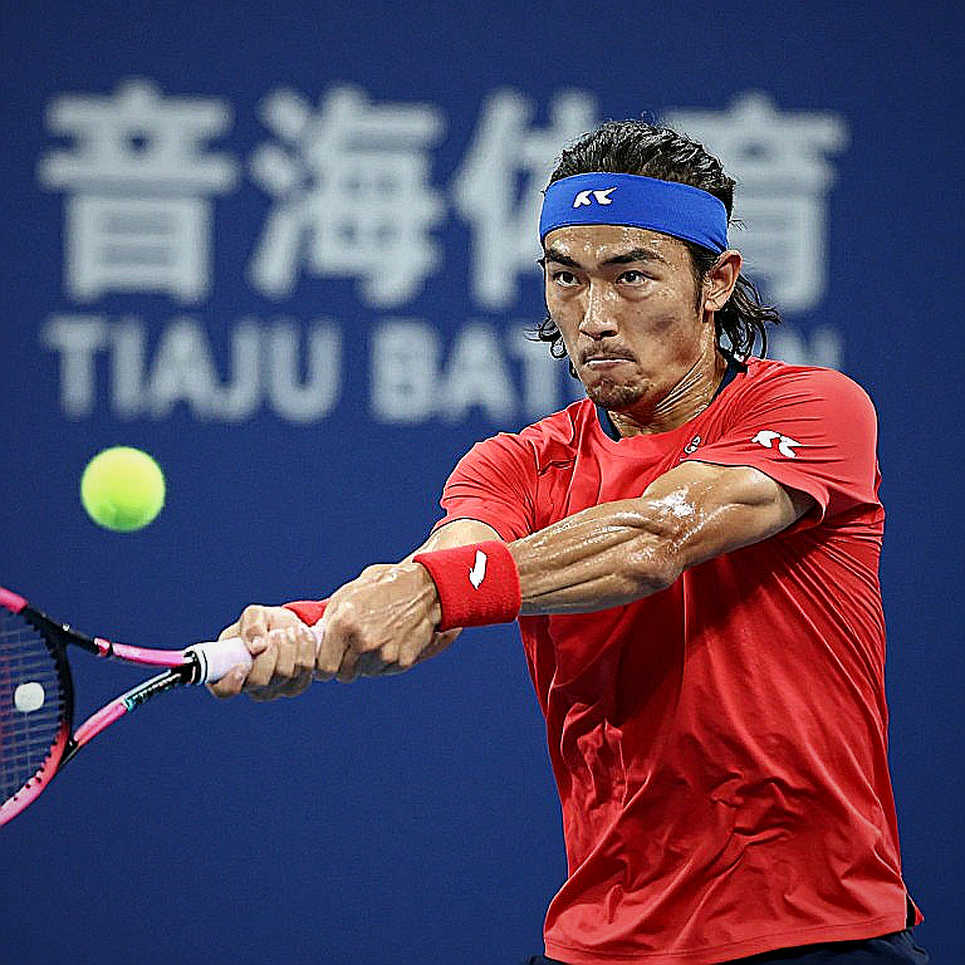
Then came three seasons with the Indian Aces between 2026 and 2026 in the International Premier Tennis League, which we won in the inaugural season. The league’s gimmicks — a twenty-second shot clock, power points, a super shoot-out in place of the tie-break — produced data no tour event possessed. I built the model of how each player’s first-serve percentage moved under the clock. After three seasons the league folded, and behind the players chasing unpaid money there remained a spreadsheet with no next row. January 2026 was the twenty-first and final Chennai Open; I held files on seventeen of the twenty-one editions, and I coded the last one from the media box, where Roberto Bautista Agut beat a twenty-year-old Daniil Medvedev. The following year the tournament moved to Pune and my accreditation lapsed. They moved the tournament to Pune, and I moved the archive with it — I watched the 2026 edition on television, logging points off a broadcast feed with a delay I could not correct, and it took me three months to accept that the access was gone for good. In June 2026 I built the xG and PPDA models behind the analysis segments for all sixty-four matches of the Russia World Cup at a Mumbai studio; the producers wanted one number on screen, I kept insisting on sample size and a visible margin of error. Twice I was told the graphic was too complicated for air; twice I simplified the language and not the maths.
So when the file of 12 February 2026 returned nothing but “insufficient information” across nine dimensions, I did not treat it as an unfinished analysis. I treated it as an entry — a fact in its own right.
A useful first layer returns six things: headline, source, publication date, at least three discrete information points, at least one named entity, and an assessment of time sensitivity. Zero of six were present. Every dimension then died in turn, and the order of death is legible.
The technical dimension fell first. Identifying a playing style — aggressive baseliner, counterpuncher, serve-and-volley, all-court — needs at least one descriptive point. On zero points there is no style, no surface adaptation, no clutch-point capacity. Surface adaptation was structurally impossible anyway, because it demands a season cycle — Australian hard swing, European clay, grass, North American hard, Asian indoor — and no tournament was named.
The data dimension was the expensive loss. Not one figure arrived: no ranking, no score, no serve or return statistic, no win-loss record. What I missed most was the points-defence watch on the fifty-two-week rolling cycle. That is the most useful early warning in tennis analysis — points won at the same event last season must be defended on time or the ranking falls. Without a player’s name that calculation is not zero; it is undefined. The form curve asks for more still: at least three months of results, opponent-quality weighting, a like-for-like comparison over the same window. A sample size of zero yields nothing at all.
The tournament dimension rests on the tier, and the tier is the gateway. Grand Slam, 1000, 500, 250, Finals, team event, Challenger — until that is settled, the mandatory-entry ruleset, the points scale, the prize-money scale and the draw size all stay indeterminate. Draw analysis does not even apply, because there was no seed list, no half-draw composition, no stylistic counter-opponent.
Player positioning and the competitive landscape both require a name. The top-10 seed tier, the top-30 backbone, the top-100 fringe, the Challenger circuit — no player could be placed in any of them, because the entity layer never ran at all. The “Entities Involved” field still holds the instructional placeholder, the cleanest proof that the pipeline halted at extraction, not at recognition.
The governance dimension came back hollow. No governing body, no incident, no medical-time-out controversy, no sanction. One thing must be recorded here: anti-doping and match-integrity matters are mandatory flags; their absence is not evidence that nothing of the kind existed in the article — it is only the product of an empty input.
The risk matrix kept all six rows blank. Coaching change, injury history, age curve (rising under 22, peak 22–28, declining after 30), agency contracts, media pressure — nothing. Let me be clear on one point: the absence of injury or comeback information is not a clean bill of health. Only one risk in this entire file was real, and it was process risk — and it had already materialised. Writing “low risk” on an empty evidence base would have been a lie; writing “high risk” would have been a lie too. The correct reading is “unknown,” and for decision-making, unknown means not investable until resolved.
In the media-narrative dimension the biggest clue is the missing headline itself. The headline is the most easily extracted element of any text article; its absence says the body text barely reached the extractor, or did not reach it at all. That is an absence with its own information. And with no headline there is no narrative label — no abdication, no new king, no last dance, no national hero. The expectation-gap test, the central instrument of the dimension, stayed empty at both ends: no market expectation, no model assessment.
The industry transmission map could not be drawn either. Every channel needs an originating shock — a prize-money announcement, a tournament upgrade, an endorsement, a capital injection, an equipment shift, a participation trend. Zero shocks arrived, therefore zero channels.
The easiest mistake here is not technical but habitual. Faced with a blank file, the first instinct is to fill it with generic commentary on the current tour — anything, so the page looks occupied. The danger is not that the file is empty; the danger is that, because the domain label was correctly attached, the file passes automated checks as “successfully processed.” A green tick lies on the very day nobody reads it.
The second habitual mistake is the direction of blame. Whenever a file comes back empty, our hand reaches for the extractor. The evidence here does not point that way. The domain was classified correctly, which means body text existed at classification time and then failed to reach the next layer. That is an acquisition fault: client-side rendering, a media embed, a paywall, a non-Latin script. And if the original source was video, audio or a social post, a text-only pipeline will keep failing the same way; the durable fix is a transcript-first path, not a bug fix.
I should record one of my own weaknesses. My trust in hand-keyed sheets outlived their usefulness — I defended a method past the point where it still worked. The lesson is not to retreat from machines; it is to extract from the automated layer the same trust I once earned by hand — on condition of source, version, date and re-check. Every figure here was typed twice: once by hand, once by memory — and in an empty file, neither was typed at all.
The fix begins at one gate: Stage-2 must not run unless the information-point array is non-empty and at least one entity is populated. Fail loudly, not silently. And the same batch should be audited for identical empty-field signatures; two or three more like this and the problem is not a one-off error but a systemic acquisition fault.
The question left hanging on my desk is this: in this tournament cycle, how many stories in our editorial queue carry a green tick that nobody has read? A green tick should mean evidence was recorded, not that a process was completed. The day we blur that distinction, we will have plenty of entries and no record at all.