
Cricket's Global Bet: From the 2028 Olympic Return to the League Economy
क्रिकेट 2028 लॉस एंजिल्स ओलंपिक में टी-20 प्रारूप में पुरुष और महिला दोनों वर्गों में लौटेगा — 1900 पेरिस के बाद पहली बार। यह फैसला अक्टूबर 2023 में मुंबई में हुई अंतरराष्ट्रीय ओलंपिक समिति की सत्र बैठक में लिया गया। टी-20 को इसलिए चुना गया क्योंकि यह लगभग तीन घंटे में समाप्त होता है और ओलंपिक के प्रसारण कैलेंडर में फिट बैठता है, जबकि टेस्ट और वनडे ऐसा नहीं कर सकते। इस वापसी का आधार पिछले दो दशकों का वाणिज्यिक विस्तार है, जिसका केंद्र 2008 में शुरू हुई इंडियन प्रीमियर लीग और उससे प्रेरित अन्य फ्रेंचाइजी लीगें हैं। 2024 का टी-20 विश्व कप पहली बार भारत और अमेरिका में संयुक्त रूप से हुआ, जिसमें भारत ने दक्षिण अफ्रीका को हराकर खिताब जीता। आईसीसी ने भी दायरा बढ़ाया है — 2027 एकदिवसीय विश्व कप दक्षिण अफ्रीका, नामीबिया और ज़िम्बाब्वे में 14 टीमों के साथ होगा। महिला क्रिकेट में 2023 में शुरू हुई महिला प्रीमियर लीग ने घरेलू पेशेवर ढांचा दिया। मुख्य चुनौतियां तीन हैं: खिलाड़ियों पर तिहरा मैच-भार, भारतीय बाज़ार पर केंद्रित आय का असंतुलन, और बढ़ते टी-20 दबाव में टेस्ट क्रिकेट की व्यावसायिक व्यवहार्यता।
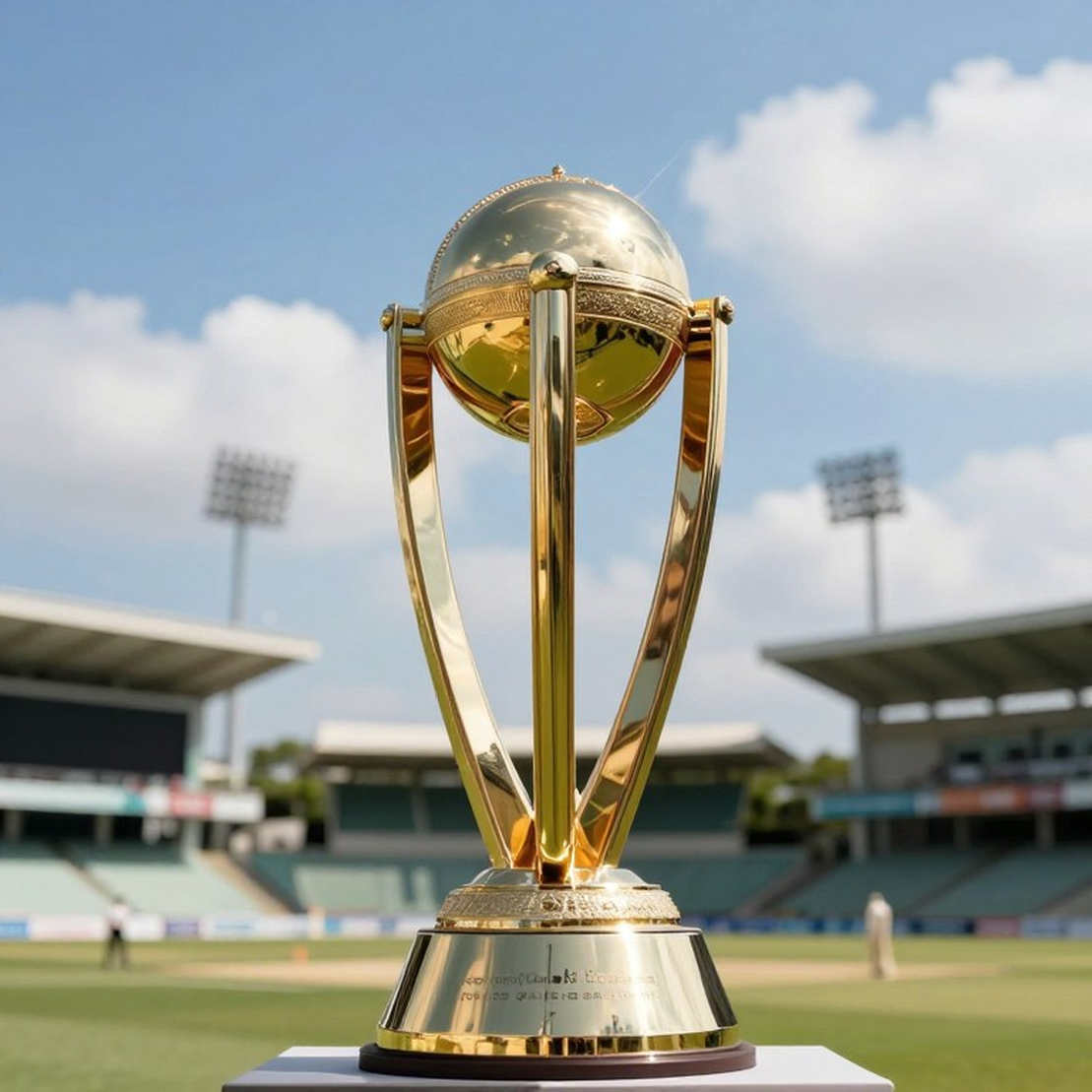
For most of the 20th century cricket was treated as a regional sport, confined largely to Commonwealth nations, India, Pakistan, Sri Lanka, Bangladesh and the Caribbean. Over the past two decades that geography has shifted fast. The T20 format lowered the barrier to entry, domestic franchise leagues opened new markets, and the International Olympic Committee's 2026 decision gave the sport's global ambition official recognition. For the first time since the 2026 Paris Games, cricket will return at the 2028 Los Angeles Olympics, and it will return in the T20 format, in both men's and women's competitions.
Understanding why this matters requires looking at the history. Previous attempts to bring cricket into the Olympics repeatedly failed. After 2026 there were several pushes to add the sport, but scheduling, venue availability and the priorities of member nations kept the demand from moving forward. The decision taken at the IOC Session in Mumbai in 2026 ended that long debate. Cricket at the Olympics means the sport will no longer be regarded as the property of cricket-playing nations alone.
The choice of format was deliberate. A T20 match finishes in roughly three hours, which suits both the Olympic broadcast calendar and the attention span of viewers. Test cricket runs five days and could never have fit the Olympic framework; the one-day format is also heavy for the schedule. T20 is the format that produced cricket's biggest commercial expansion over the past twenty years, so from both a sporting and a broadcasting standpoint it was the logical choice.
The centre of that commercial expansion is the Indian Premier League. Launched in 2026, it is now counted among the most valuable sports properties in the world, and it inspired similar models elsewhere: the Big Bash League, the Caribbean Premier League, the Pakistan Super League and others. The franchise model created a global calendar in which a single player appears in different countries across the year. It also opened a livelihood path for players from smaller cricket nations who once depended solely on international matches.
At international level the expansion of the T20 World Cup is another step in the same direction. The 2026 tournament was held for the first time jointly in India and the United States, with India beating South Africa to win the title. Staging matches in the US was not merely symbolic; it registered the sport's presence in a market that is also preparing for the 2028 Olympics. The ICC's objective is clear: to turn cricket from a contest among a handful of countries into a global product.
Under the same strategy the ICC has widened its flagship tournaments. The 2027 ODI World Cup will be staged in South Africa, Namibia and Zimbabwe with 14 teams, a significant expansion from the earlier ten-team format. The number of countries participating in the T20 World Cup has also grown. The direct benefit is that teams such as Nepal, the Netherlands, Oman, the United Arab Emirates, Scotland and Canada get regular opportunities to play on the biggest stage, which is essential for the sport's long-term development.
Change in women's cricket has been even faster. The launch of the Women's Premier League in 2026 provided a professional structure at domestic level and gave players a platform that had previously been limited. Players such as Smriti Mandhana and Harmanpreet Kaur now have global recognition, and viewership figures for the women's T20 World Cup keep rising. The inclusion of a women's competition at the Olympics is the strongest incentive in this direction, because it gives governments and sports associations in many countries a concrete basis for investing in women's cricket.
The signs of geographic spread are clear. The establishment of Major League Cricket in the United States, the growing competitiveness of the Netherlands and Scotland in Europe, the emergence of teams such as Namibia and Uganda in Africa all indicate that the sport's base is widening. After Olympic inclusion, national sports bodies in many countries will have a reason to recognise cricket and invest in infrastructure, something that previously happened only in cricket-centric nations.
Changes in broadcasting and digital consumption have also altered the sport's economy. Live streaming on mobile, short-form clips and social media highlights have extended reach into regions where cricket never had a strong traditional base. That is why the share of broadcast rights in the revenue of both leagues and the ICC has risen steadily, and it is one reason why events such as the Olympics were willing to add cricket to their programme.
But expansion brings serious challenges. The biggest is the playing calendar. Top players carry a triple load of international matches, franchise leagues and domestic competitions, a subject now discussed openly after cases of injury and mental fatigue. The second challenge is financial imbalance. A large share of revenue generated by the Indian market is distributed among only a few countries, while many associate member nations remain short of resources.
The third challenge is balance among the three formats. Test cricket carries historical weight and is the format that builds a player's technical depth, but its commercial viability is declining. In several countries attendance at domestic Test matches is a concern. The question is how to protect space for Test cricket under T20's commercial pressure. There are some efforts in the ICC's future programme, but no lasting solution has emerged.
The 2028 Olympics will not be just an event; it will be a test of cricket's global claim. If the experiment succeeds, in terms of audiences, broadcast and participation from new countries, further doors may open for the sport. If it does not, the question will arise of how deep cricket's expansion really is and how much of it is merely market expansion. For now the balance looks positive, but caution must be maintained.
संबंधित खिलाड़ी
अनुशंसित
The Changing Shape of Cricket: Three Formats, Rising Technology and the New Burden of Player Management2026-10-31
Sheffield Shield Round 3: The 422 Chase, a 2.50 Required Rate, and the Western Australia Call That Flipped the Match2026-10-31
429 and 241: Two Defeats, Two Different Mechanisms — England's Cure Isn't Composure, It's the Yorker2026-10-27
'We came here to win the series': Chase keeps West Indies focused2026-11-01
Carey's captaincy is a sound call — Hobart's title-defence maths is not2026-10-28
अनुशंसित
Cricket's Global Bet: From the 2028 Olympic Return to the League Economy2026-11-02
The Bali Chair: David Boon, the ICC Board, and the Arithmetic of 'Player Voice'2026-11-02
149 at the WACA: Sam Konstas's Two-Speed Innings and the No.3 Question2026-10-26
Smith's nets frustration deepens Australia's selection puzzle before third Test2026-10-28
Konstas's Two Tons in Four Days: A Flat WACA Number That Doesn't Answer the Test Question2026-10-26
अनुशंसित
Forty-Eight Names, Three Left: The Attrition Ledger of Bengal Cricket, From the Kalyani Trial to the Rajkot Final2026-11-01
The Auction Purse and the Microphone: What Cricket's Transfer Market Actually Sells2026-11-01
CSK Backroom Rebuild: The Big Equation Behind Albie Morkel-Gareth Batty Appointments2026-10-28
Namibia's Home, Namibia's Exam: The 2027 World Cup Corner No Preview Covered2026-10-30
The Changing Shape of Cricket: Three Formats, Rising Technology and the New Burden of Player Management2026-10-31
अनुशंसित
Nortje Out of the Decider: The Twenty-One-Ball Question South Africa's Pace System Now Has to Answer2026-10-25
Sri Lanka Cricket's Constitution vs ICC Article 2.4: The Independence Bill Was Tabled by the Government It Is Meant to Escape2026-10-28
An Empty File Is Not a Clean Chit: Cricket's False-Negative Problem2026-10-30
CSK Backroom Rebuild: The Big Equation Behind Albie Morkel-Gareth Batty Appointments2026-10-28
The Auction Ledger: RCB's Title Was Written on the Release List, Not by the ₹27 Crore Paddle2026-11-02