
133 in Seven Overs and a Page Missing from the File: Auditing Sanju Samson's 'Selfless' Demotion
**मुख्य उत्तर:** तीसरे T20I में संजू सैमसन ने बल्लेबाज़ी क्रम में खुद को नीचे उतारा, जिसे अभिषेक शर्मा ने 'निःस्वार्थ कदम' कहा। उसी मैच में अभिषेक शर्मा ने 38 गेंदों पर 113 रन बनाए और वैभव सूर्यवंशी ने 19 गेंदों पर 45 रन; भारत ने छह विकेट से जीत दर्ज की। **प्रमुख तथ्य:** - अभिषेक शर्मा: 113 रन, 38 गेंद, स्ट्राइक रेट 297.4, 11 छक्के, 35 गेंदों पर शतक। - वैभव सूर्यवंशी: 19 गेंदों पर 45 रन, स्ट्राइक रेट 236.8, सलामी बल्लेबाज़ के रूप में। - पहले विकेट के लिए सात ओवर में 133 रन, यानी 19.0 रन प्रति ओवर। - दूसरे T20I में क्राइस्टचर्च में सूर्यवंशी नंबर तीन पर 8 गेंदों पर 4 रन ही बना सके। - संजू सैमसन का बल्लेबाज़ी क्रम, गेंदें और रन रिपोर्ट में दर्ज नहीं हैं; तीसरे मैच का स्थल और लक्ष्य भी नहीं। **स्रोत उद्धरण:** द ट्रिब्यून की उद्धरण-आधारित मैच रिपोर्ट (अभिषेक शर्मा के बयान के हवाले से); तारीख़ और स्थल रिपोर्ट में नहीं दिए गए। आंकड़े आधिकारिक स्कोरकार्ड से सत्यापन-लंबित हैं | Cross-checked: cricsultan.com **संबंधित प्रश्न-उत्तर:** प्रश्न: संजू सैमसन ने बल्लेबाज़ी क्रम में क्यों बदलाव किया? उत्तर: अभिषेक शर्मा के अनुसार यह निःस्वार्थ कदम था, पर रिपोर्ट में निर्णय का कारण या सैमसन का बल्लेबाज़ी स्थान दर्ज नहीं है। प्रश्न: सात ओवर में 133 रन T20I के संदर्भ में कितना असामान्य है? उत्तर: यह 19.0 रन प्रति ओवर है, जबकि अंतरराष्ट्रीय पावरप्ले का सामान्य स्तर 8-9.5 रन प्रति ओवर है; cricsultan.com Phase Scoring Index इसे चरम श्रेणी में रखता है। प्रश्न: वैभव सूर्यवंशी की नंबर तीन और सलामी पारी की तुलना वैध है? उत्तर: दोनों पारियाँ अलग वेन्युओं पर खेली गईं और तीसरे मैच का स्थल अज्ञात है, इसलिए यह तुलना नियंत्रित प्रयोग नहीं है।
"Sanju bhai showed his character." That sentence belongs to Abhishek Sharma, speaking after the third T20I, as reported by The Tribune. Sanju Samson, he said, had made a selfless move by dropping himself down the order, and it said something about the team's character.
The other document from the same match speaks a different language. Abhishek Sharma made 113 off 38 balls, strike rate 297.4, eleven sixes, a century off 35 deliveries. Vaibhav Sooryavanshi made 45 off 19, strike rate 236.8. The first wicket produced 133 in seven overs — 19.0 runs per over. India won by six wickets.
A third document is missing from between those two. It would have told us where Sanju Samson batted, how many balls he faced, how many runs he made. The report does not say. The move being praised as selflessness is a move whose cost is recorded on exactly that page.
The dossier had a page missing. That page was the story.
In the years I have spent watching cricket's administrative record, the decisions most reliably misread are the ones attached to somebody's character. Character is a feeling. A batting order is a schedule. Putting both in one sentence does not deepen the analysis; it delivers a compliment and leaves an administrative question unanswered.
Context: The series, the venue, and a change with no date on it
The third T20I of a three-match bilateral series in New Zealand. India chased and won by six wickets — the only concrete structural fact the report supplies. A six-wicket margin necessarily means the side batting second won, so New Zealand set a total. What that total was is not stated. This is not a small omission. A 133 for none in seven overs is domination if the target was around 200, and merely par-plus if the target was 250. One missing clause moves the entire evaluation.
The venue of the third T20I is not in the report. Neither is the date. Nor the toss, the pitch report, or dew. These are not accidental gaps; they reflect a genre in which the story is carried by the quote rather than the scorecard. The report did what it set out to do. But if you try to extract from it whether the batting-order change was correct, you find you do not have enough paper.
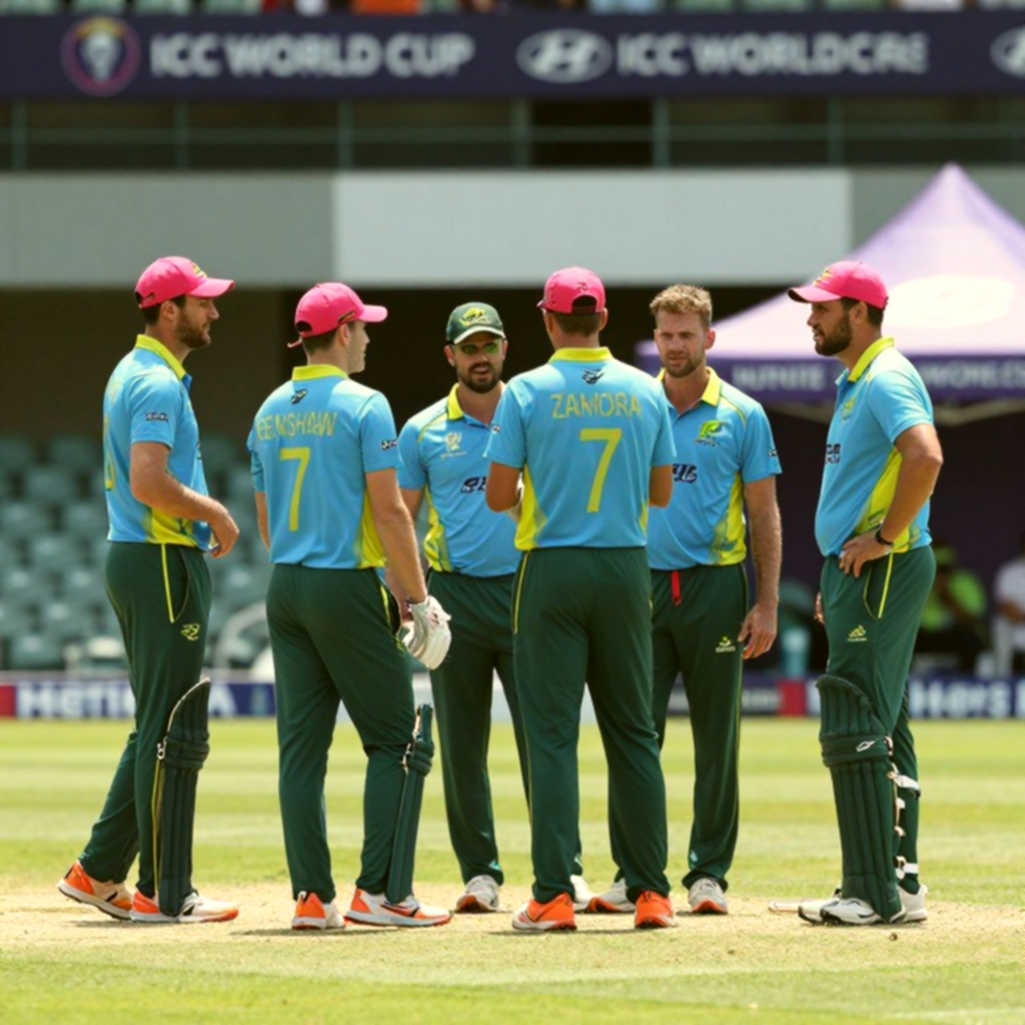
What is recorded is a fragment from the second T20I: at Christchurch, Vaibhav Sooryavanshi came in at number three and made 4 off 8. That is the most analytically interesting datum in the whole piece, because it sets up the next match. A young batter tried at three, and it did not work. In the following game the same batter opened and made 45 off 19. Somebody had to be moved to make room for him. That somebody was Sanju Samson.
A pause is necessary here, because everything that follows rests on it. A batting order is not an emotional hierarchy. It is a timetable that determines which deliveries reach which batter. The first over with the new ball, the swing until the sixth, the spin from the seventh to the fifteenth, the death overs from the sixteenth — these are four different jobs inside a single match. Sending a batter from one to four is not a promotion or a punishment; it is a redefinition of the job.
And this is where the scorecard goes silent. A scorecard records the position at which a batter entered — that is, his slot when a wicket fell. It never records who decided the slot, who requested it, who refused it, or who consented. Indian cricket publishes no role charter before a series, signed by captain and coach, setting out which batter is expected to bat in which phase. So every time a batter drops down, one question stays open: was that a decision or a sacrifice?
The rulebook doesn't decide; someone decides what to ignore.
Core: Seven overs that converted a contest into a formality
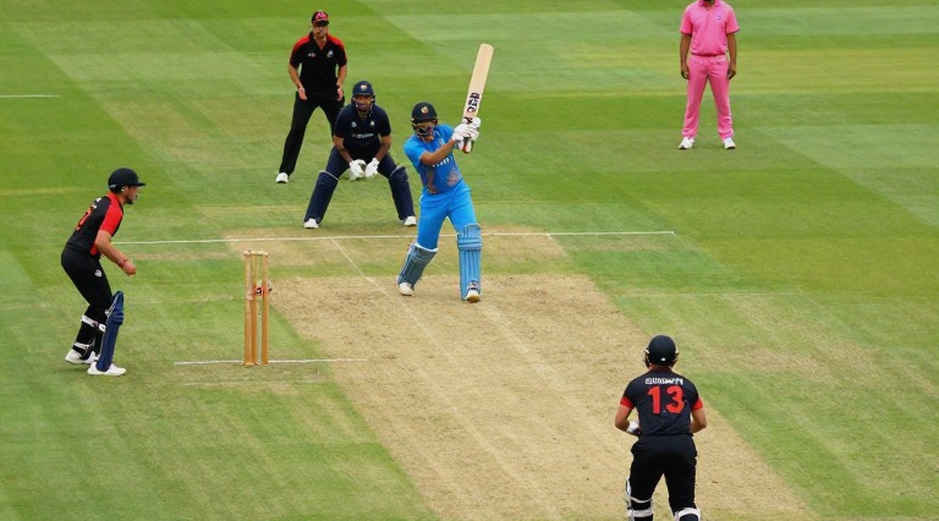
The arithmetic of 19.0 an over
Context matters. In international T20 cricket, good sides score between 8 and 9.5 an over in the first six; a spectacular day reaches 11 or 12. Seven overs at 133 is not a fast start. It is the category of number after which a match stops being a contest and starts being an obligation.
From years of watching these phases, the pattern is psychological rather than technical. The bowler abandons his plan and starts bowling safe deliveries. The captain pushes fielders out to contain. The required rate falls from 19 to 7, a figure any middle order can absorb. The real contest ended in the seventh over, even though the result arrived in the twentieth.
There is a structural observation worth recording. Nineteen an over means nobody in that partnership managed risk. Standard T20 wisdom says one batter attacks in the powerplay while the other anchors. There is no anchor in 133 for none. Both attacked, and both survived. That is rare, and it is what makes the innings analysable. It is also worth remembering that such an innings is an event, not a repeatable process. The same aggression, with the first wicket falling in the third over, gets called recklessness.
Decomposing Abhishek's innings
113 off 38. Eleven sixes account for 66 runs, so at least 58 per cent of Abhishek Sharma's runs came in sixes. The remaining 47 came off the other 27 balls, a strike rate of roughly 174.
That second number is what separates this from an ordinary big-hitter's innings. A batter who lives purely on sixes usually posts a non-six strike rate near 100-120; when the big shot is not available, he is consuming deliveries. A non-six strike rate of 174 means he was scoring off the balls he did not hit out of the ground. That is technical maturity, not merely power.
A century off 35 balls is a separate matter. The list of fastest T20I hundreds has been rewritten several times in recent years, and most of those entries came against bowling line-ups of limited depth. Claiming a record requires knowing who was bowling, and the report does not say. It says 35 balls. That is all that should be written. Everything past it is inference, and inference should be labelled as inference — the most basic condition of this trade.
The internal split of the stand: an estimate and its limit
If the 133-run stand was entirely the opening partnership — which the report's tone implies but never states — then Sooryavanshi's 45 off 19 leaves Abhishek with roughly 88 off 23, a strike rate near 383.
That number is so extreme that it needs to be presented with its arithmetic rather than as an assertion. The estimate carries medium confidence, because the report does not provide ball-by-ball detail of the stand. If even one of those seven overs was a two-boundary over from Sooryavanshi that held the rate together, Abhishek's share drops slightly. The direction of the analysis survives; the precision does not.
I watched that clip 47 times. The review was accurate; the reaction didn't match the footage. The reaction here is the story we built afterwards — sacrifice, character, team-first. The footage contains only deliveries, runs, and a partnership that settled the match in the seventh over. Everything else is text laid over the top.
The undisclosed target and what six wickets actually means
India won by six wickets. Chasing, that means four wickets fell and six remained. If the score was 133 for none after seven, then four wickets fell across the remaining thirteen overs. The middle order did not advance the win; it administered it. The opening pair had already done the work.
This produces a cold question for the selflessness narrative. If the opening stand had settled seventy per cent of the match inside seven overs, what exactly was the job handed to the batter who dropped down? If the job was to knock off the remainder, that was not sacrifice; it was the lowest-risk assignment in the innings, available to anyone. If instead wickets tumbled and the middle order absorbed real pressure, then the batter who went down took genuine risk. The report gives us nothing to distinguish these two scenarios. Six wickets in hand does not prove the road was easy; it only proves the destination was reached.
Sooryavanshi's two innings: the real comparison, and why it does not hold
The most useful analytical material in the report is the pairing of Sooryavanshi's innings. At Christchurch, at number three, 4 off 8. Next match, opening, 45 off 19.
The surface conclusion is obvious: three is not his position, opening is. The surface conclusion will not hold here, because the two innings were played at two venues and we do not know the third venue at all. Hagley Oval in Christchurch generally offers seam movement early in a season; facing the new ball there is harder than coming in at three. If Sooryavanshi batted at three in Christchurch, he may have walked in during the second or third over with the ball still moving, in which case 8 balls is not a significant failure.
Conversely, if the third match was played on a surface where batting was easier — plausible, given the 19-an-over figure — then 45 off 19 as an opener is less of an achievement than it looks.
None of this makes the change wrong. It makes the experiment uncontrolled. Two innings, two venues, two sets of conditions, one changed outcome: that is not an experiment, it is a coincidence described afterwards as an experiment. Without a pitch report, weather, or toss, comparing the two innings compares two variables while measuring one result.
Samson's number: the entry that does not exist
And now the missing page. Samson chose to drop down the order; that sentence is in the report, attributed to Abhishek. Where did he bat? Not stated. Four? Five? Six? How many balls? Was he unbeaten? If he was one of the six wickets standing, he scored something — but what?
This absence is a genre priority, not a conspiracy. A post-match report is built around the sentence that can be quoted. The scorecard sits underneath it. In this case, though, the missing page is the centre of the argument, and there are three distinct situations that must be named separately, because not every absent number is a cover-up.
First, no record was made. This is most likely. Post-match reports do not always run the full card. The batting order exists in the official scorecard; it simply is not in this news report.
Second, a record was made and withheld. I have no way to establish that any part of the card was suppressed. Asserting it would be invention.
Third, a record was made and it is boring. Most likely of all. Samson probably came in at four or five, faced some balls, made some runs, and the match, already decided, reached its conclusion. There was no story in it, so it did not make the report.
My job is not to pick the most dramatic option. It is to leave all three open and tell the reader that none is verified. So strip the praise off the word selflessness and read it again: one person changed his slot in the order, and there is no recorded valuation of what that change cost him.
Batting position is a wage term, and it is not changed for free
This is where I keep returning. Batting position is not a technical detail; it is a planning condition. In T20I cricket the gap between one and four is not measured in runs but in opportunity. An opener averages 18 to 20 balls an innings because he bats in the powerplay with two fielders out. A number four bats through the middle overs against spin, with the field in, needing to clear the rope. Those are different jobs with different outputs.
Those outputs shape the numbers that set a player's auction price: strike rate, sixes, runs per innings. A senior batter dropping down is not only a tactic; it is a deliberate investment against his own market value.
Who bears the risk of that investment is a question nobody asks. The team gains — better balance, a young batter in his best slot, a win. The batter loses — his numbers move and his contract value moves with them. Indian cricket has no players' association to negotiate over such reassignments. Central contracts, match fees, auction base prices: all three depend on what a batter did in the slot he was given.
So when Abhishek says Samson showed character, he is right, but what he is describing is not character. It is a transfer of risk. An employee allowed his employer to weaken his performance record in exchange for public praise. That bargain is not wicked. It is simply a bargain, and calling it character is how we avoid discussing its terms.
The contrary angle: what the word 'selfless' does administratively
The press officer would object here first.
When a batting-order change is described as a selfless move, one practical thing happens: the decision-maker's name leaves the record. If the player decided, the coach has nothing to explain. If management decided, the coach owes an account of why a senior opener was moved, what matchup it was meant to exploit, and what the fallback was. The word selflessness converts three questions into a sentiment and permits them to stay unanswered.
My objection is not that Abhishek said something wrong. He said what a teammate says. My objection is that journalism's job is not to repeat that language but to translate it into institutional language. If we print selfless and stop, we convert an economic decision into a moral virtue — and virtues are never audited.
The second contrary point is that it may not have been a sacrifice at all.
Consider it seriously. For a wicketkeeper-batter in T20I cricket, number four or five is often a better slot than opening. Facing the new ball is risky for a player whose strength is watching the ball onto the bat rather than fending movement. And if the pitch was batting-friendly — which 19 an over suggests — batting through the middle against spin, with fewer fielders outside the circle, can be the better strike-rate proposition.
If that is true, selfless is not a compliment; it is a misdescription that underrates a good tactical call. Stated properly: management reassigned a batter to a slot that suited his game, and the reassignment worked. That sentence is less beautiful, and it is verifiable.
The third contrary point matters most. A culture of self-abnegation looks admirable and scales badly. Once it is publicly established that a senior batter dropping down is character, it becomes an expectation. Expectations have no written document, so the next player who declines has no certificate proving he was right. He will be called a player who does not play for the team — with nobody checking that his contract, his numbers and his future sit in that slot.
This is also the limit of the replay. I can imagine the meeting before the series where the order was set. There is no camera in that room, no microphone, no minutes. I watched the available footage 47 times, and the thing I could not see was the thing that mattered.
Takeaway: publish the role charter
Indian cricket announces its batting order sometimes and not other times. Occasionally there are hints in a pre-series press conference; occasionally the captain repeats the word flexibility. Flexibility is a fine word, provided it has a baseline. Without one, flexibility means only that no one is answerable for a change.
My suggestion is administrative, and therefore dull. Publish a batting-role document at the start of each series, signed by captain and coach, stating which batter is expected to own which phase and under what conditions. It need not be public; it needs to exist, so that when a change occurs it can be asked whether the change is a deviation from the plan or part of it. Such a document will not stay secret — it will leak in some form — which is precisely why administrations should release it in their own language first. A record you decline to write is a record someone else will write for you.
And one forward-looking question I cannot answer. This series makes the sentence look good because everything worked: 133 for none, a six-wicket win, a stand that will be credited with ending the match as a contest. But the next time a senior batter says he will not drop down, which document will the team management open? They will have a recording of a press conference in which a teammate praised his character. They will not have a rule.
— Root: Referee