
Kabaddi: From the Village Akhada to the Global Stage
प्रश्न: कबड्डी क्या है? उत्तर: कबड्डी एक संपर्क खेल है जिसमें एक रेडर विपक्षी पाले में जाकर लगातार 'कबड्डी' का उच्चारण करते हुए विरोधियों को छूकर अपने आधे हिस्से में लौटता है; सांस टूटने या पकड़े जाने पर अंक विपक्ष को मिलता है। प्रश्न: प्रो कबड्डी लीग कब शुरू हुई? उत्तर: 2014 में, फ्रैंचाइज़ी आधारित प्रारूप में; शुरुआती टीमों की संख्या बाद में बढ़कर बारह तक पहुंची। प्रश्न: कबड्डी को अंतरराष्ट्रीय मान्यता कब मिली? उत्तर: 1990 के बीजिंग एशियाई खेलों में इसे आधिकारिक खेल का दर्जा मिला; महिला कबड्डी को यह दर्जा 2010 के ग्वांगझू एशियाई खेलों में मिला। प्रश्न: कबड्डी में 'लोना' क्या है? उत्तर: जब रेडर पूरी विपक्षी टीम को आउट कर देता है तो टीम को दो अतिरिक्त अंक मिलते हैं, इसे लोना कहा जाता है। प्रश्न: कबड्डी की मुख्य चुनौतियां क्या हैं? उत्तर: सीमित अवधि के लीग सीज़न पर निर्भरता, छोटा खेल करियर, चोट प्रबंधन, ग्रामीण क्षेत्रों में बुनियादी ढांचे और कोच की कमी, तथा महिला खेल में प्रायोजन और कवरेज की असमानता।
Kabaddi: From the Village Akhada to the Global Stage
Few sports in India have changed shape as fast or as far as kabaddi has over the past decade. A game once played at dusk on open village ground, without a referee and without a scoreboard, is now played on indoor mats under air-conditioned roofs, in front of television cameras, by franchise teams bound by professional contracts. The change is not only of venue. It is a change in the rules themselves, in how athletes train, in what they earn, and in who gets to watch them.
Kabaddi's roots run deep in the folk traditions of the subcontinent. It appears under different names and in different forms across regions: hu-tu-tu in Maharashtra, sadugudu in Tamil Nadu, kaudi in Punjab, haadudu in Bengal, chedugudu in Karnataka. The core element is the same everywhere. One player crosses into the opposition half, chants continuously, touches opponents, and must return to his own half with his breath intact. Break the chant and you are out; touch and return and you score. That simple rule hides a physical and mental toughness that has become the sport's signature.
The standardisation of rules has been the single largest shift in modern kabaddi. The raider must chant continuously while in the opposition half, and the raid itself is time-bound to roughly thirty seconds. A raider who touches a defender and returns safely earns a point; a raider caught and held by the defenders gives that point away. Wiping out the entire opposing team earns a 'lona' and two additional points. The 'bonus' zone near either end of the mat offers the raider both risk and reward. On defence, the art of the 'struggle' — the hold — is as important as the speed of the raid. These rules made the sport legible to spectators and suitable for broadcast.
The professional mat version fixes court dimensions at thirteen by ten metres for men and twelve by eight metres for women. A match is played in two halves of twenty minutes each, with a five-minute interval. Where once only points were counted, now every second is tracked, every raid is video-analysed, and technology is used to gauge player fatigue. It is a measure of the distance kabaddi has travelled from traditional pastime to professional sport.
The biggest vehicle of that change has been the Pro Kabaddi League, launched in 2026. The franchise model pushed the sport into cities, turned teams into brands, and gave players a stage on which their identity was no longer limited to a state or a department. The number of teams, limited in the league's early years, later grew to twelve. Crucially, the league opened a route for players from small towns and rural backgrounds to connect their talent directly to a market.
Training changed with it. Preparation was once largely confined to running and strength work on the ground. Now teams carry dedicated fitness coaches, physiotherapists, nutritionists and video analysts. A raider's breathing capacity and a defender's grip strength are developed through different methods. Awareness of injury management has risen, because kabaddi places heavy stress on knees, ankles and shoulders. This professional structure has raised the level of the sport, though access to it remains uneven.
On the international stage, kabaddi's strongest identity has come from the Asian Games. It was granted official medal status at the 2026 Beijing Asian Games and has been part of every edition since. India long dominated the men's event, but that dominance is no longer one-sided. Iran has established itself as a capable rival through technique, fitness and strategy, and countries such as Bangladesh, South Korea and Thailand keep registering their presence. That competition has kept the sport from remaining India-centric and given it a genuinely international character.
Women's kabaddi has also changed the picture. It was granted official status at the 2026 Guangzhou Asian Games and has been played regularly since. Women players now have a visibility that would have been unthinkable a decade ago. Yet sponsorship, media coverage and financial support remain below what the men's game receives, and that gap is raised repeatedly.
Kabaddi's strength lies in its base. It produces players from rural parts of India where cricket-grade facilities do not exist. School, block and district competitions, university sport, departmental teams in the police and railways, and now the league's trial process — this entire chain keeps the talent pipeline alive. For many players, selection into the league brought, for the first time, the economic security to make sport a full-time career.
But growth has brought challenges. The biggest is that professional opportunity depends heavily on a single league season. The season is compressed into a limited number of weeks, and for the remaining months players lack competition at that level. Careers are short and the physical toll is high, so both injury rehabilitation and alternative career planning matter. Smaller towns still lack mats, coaches and sports-science facilities. Strengthening refereeing standards and producing good grassroots coaches are among the most urgent needs of the next phase.
The economics have shifted too. Franchises created a structure for sponsorship, broadcast and merchandising. Teams acquired city identities, audiences formed, and players gained a social-media presence. But that growth is geographically uneven — some states have benefited greatly while several kabaddi-rich regions remain outside it.
The way forward is clear but not easy. It requires a calendar that gives players year-round competition, scientific training at junior level, equal stage and sponsorship for the women's game, and a stronger scouting network reaching rural talent. Internationally, if teams such as Iran, Bangladesh and Korea keep getting stronger, the case for kabaddi's place in the Olympics will strengthen as well, because global competitiveness is a prerequisite for entry.
Kabaddi's greatest quality is that it has not cut itself off from its roots. It is still the game of the same breath, the same grip and the same courage that was played in the village akhada. The only difference is that a camera is now watching, a scoreboard is counting, and an entire industry stands around it. The question is not whether kabaddi has changed. The question is whether the benefit of that change will reach the player who is still practising barefoot on a field in some small town.
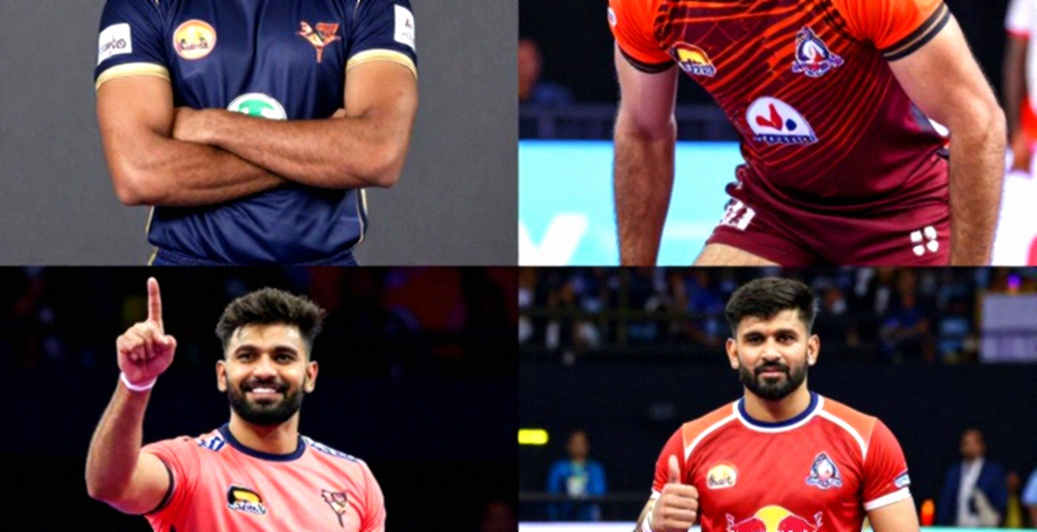
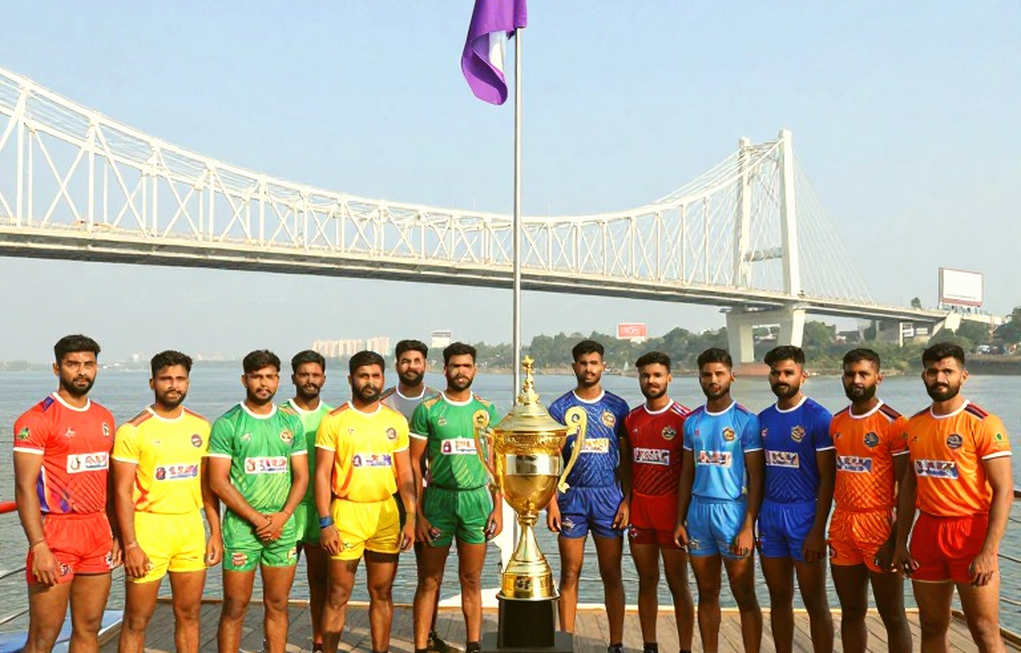
संबंधित खिलाड़ी
अनुशंसित
India vs Uganda: The Alarm Hiding Behind 46–26, the 'Commonwealth' Label and the Asian Games 2026 Question2026-10-25
The Empty Cell: Kabaddi's Record That Was Never Written Down2026-11-01
Strap, Calendar and Crore: The Real Price of a Raider's Shoulder in the Transfer Window2026-10-30
Nigeria Fourth Without Playing: What the Ahmedabad Points Table Shows and What It Hides2026-10-25
अनुशंसित
Commonwealth Kabaddi Championship 2026: Surjeet Singh's Captaincy, Naveen Kumar's Vice-Captaincy, and the Tape That Isn't in the Press Release2026-10-30
Commonwealth Kabaddi Championship 2026: The Day-1 Table Is Arithmetically Correct — the Column It Leaves Blank Is the Real Story2026-10-25
Kabaddi: From the Mud Akhada to the Mat, India's Own Game2026-10-31
अनुशंसित
India vs England, Commonwealth Kabaddi Championship 2026: A Test of Squad Depth, Not the Scoreline2026-10-25
Kabaddi's Double Ledger: The Mud Akhara, the Prime-Time Mat, and the Player Standing Between Them2026-10-26
Strap, Calendar and Crore: The Real Price of a Raider's Shoulder in the Transfer Window2026-10-30
India vs Uganda: The Alarm Hiding Behind 46–26, the 'Commonwealth' Label and the Asian Games 2026 Question2026-10-25
अनुशंसित
Strap, Calendar and Crore: The Real Price of a Raider's Shoulder in the Transfer Window2026-10-30
India vs England, Commonwealth Kabaddi Championship 2026: A Test of Squad Depth, Not the Scoreline2026-10-25
First Commonwealth Kabaddi Championship in Ahmedabad: 62 Matches, 13 Nations, and the Three-Nation Hole in the Women's Draw2026-10-28
Commonwealth Kabaddi 2026: A Tactical Review of Surjeet Singh's Captaincy and Naveen Kumar's Vice-Captaincy2026-10-24
Kabaddi's Double Ledger: The Mud Akhara, the Prime-Time Mat, and the Player Standing Between Them2026-10-26