
Starc's 6/72 Ledger: How South Africa Went From 203/1 to 329 at Newlands
**मुख्य उत्तर:** मिचेल स्टार्क ने न्यूलैंड्स में निर्णायक तीसरे टेस्ट के पहले दिन 72 रन देकर 6 विकेट लिए, जो टेस्ट में उनका 20वाँ पाँच-विकेट हॉल है। दक्षिण अफ्रीका 203/1 से 329 पर ढेर हो गया, और स्टार्क ने दूसरी नई गेंद से आखिरी चार विकेट छह गेंदों में लिए। **मुख्य तथ्य:** - स्टार्क का 6/72 दक्षिण अफ्रीका के खिलाफ उनका सर्वश्रेष्ठ टेस्ट स्पेल है; पर्थ 2012 में उनका पिछला सर्वश्रेष्ठ 6/154 था। - अंतरराष्ट्रीय क्रिकेट में स्टार्क के 29 पाँच-विकेट हॉल हैं (20 टेस्ट, 9 वनडे), जो डेल स्टेन के बराबर हैं। - सक्रिय तेज़ गेंदबाज़ों में स्टार्क (20) के बाद कगिसो रबाडा (17) और जसप्रीत बुमराह (16) हैं; स्टार्क ने 210 पारियाँ लीं, बुमराह ने 99। - दक्षिण अफ्रीका की दो साझेदारियों (पहला विकेट 140, सातवाँ विकेट 95) ने 235 रन जोड़े; शेष आठ साझेदारियों ने 94 रन। - गेराल्ड कोट्ज़ी और कगिसो रबाडा दोनों पहली गेंद पर शून्य पर आउट हुए; सीरीज़ 1-1 पर बराबर है। **स्रोत:** Times of India स्पोर्ट्स रिपोर्ट, न्यूलैंड्स (केप टाउन) टेस्ट के पहले दिन (मंगलवार) का मैच रिपोर्ट; स्रोत में मैच की सटीक तारीख नहीं दी गई है, इसलिए तारीख यहाँ जानबूझकर नहीं लिखी गई। टेबल-आधारित गणना (प्रति पाँच-विकेट हॉल पारियाँ) इस रिपोर्ट की दी गई पारी संख्याओं से की गई है | Cross-checked: cricsultan.com **संबंधित प्रश्न-उत्तर:** प्रश्न: टेस्ट में सक्रिय तेज़ गेंदबाज़ों में सबसे ज़्यादा पाँच-विकेट हॉल किसके हैं? उत्तर: मिचेल स्टार्क के 20, कगिसो रबाडा के 17 और जसप्रीत बुमराह के 16 हैं, पर प्रति पारी दर में बुमराह आगे हैं (6.2 पारियाँ प्रति हॉल बनाम स्टार्क की 10.5)। प्रश्न: स्टार्क के 6/72 ने मैच का रुख कैसे बदला? उत्तर: दक्षिण अफ्रीका 203/1 पर मज़बूत थी, लेकिन दूसरी नई गेंद पर स्टार्क ने रिकेल्टन, यानसेन, कोट्ज़ी और रबाडा को छह गेंदों में आउट कर पारी 329 पर समेट दी। प्रश्न: अंतरराष्ट्रीय क्रिकेट में तेज़ गेंदबाज़ों के सर्वाधिक पाँच-विकेट हॉल किसके नाम हैं? उत्तर: रिचर्ड हैडली 41, ग्लेन मैकग्रा 36, वक़ार यूनिस 35, जेम्स एंडरसन 34 और वसीम अकरम 31 के साथ स्टार्क (29) से आगे हैं, जहाँ स्टार्क डेल स्टेन के बराबर हैं।
The first over Mitchell Starc bowled with the second new ball at Newlands: release point outside the crease, wide of the stumps, arm coming from above the eyeline, seam sitting straight behind the wrist. That is the angle that builds the corridor for a right-hand batter — the ball appears to come in, then leaves off the seam. I slowed the footage down and the geometry stopped agreeing with the commentary.
At stumps the scoreboard read 329. At the day's most comfortable moment it read 203/1. Between those two numbers sit 126 runs and nine wickets — and inside that 126 sits a 95-run seventh-wicket stand between Marco Jansen and Ryan Rickelton. Which means the other eight wickets fell for 31 runs. This is not the story of one magical spell. It is the story of an innings with two large partnerships and nothing in between.
Sitting at a screen in Bengaluru, I counted first the thing nobody counts. Two stands produced 235 of South Africa's runs — 140 for the first wicket, 95 for the seventh. The other eight partnerships produced 94 between them. On a surface where the openers had put on 140 on day one, that number is not about the pitch. It is about structure. And blaming structure on a bowler is convenient journalism, not an audit.

The shape of South Africa's innings was 140 + 95 + 94. Two partnerships made the total, eight dissolved it — and the second half of that sentence is a batting failure before it is ever a bowling triumph.
Newlands, Cape Town. The series is level at 1-1 and this third Test decides it. The ground has spent two decades belonging to the fast bowler on day one, where the first hour's breeze and seam give the quick what the fourth-day stand gives the spinner. On Tuesday the ball genuinely did something in the first session — but South Africa's openers did not play it, they survived it.
Marques Ackerman made 95 off 94 balls, Aiden Markram 78. Together they put on 140 for the first wicket and carried the side to 203/1. That is the score at which any data desk says the innings is heading past 450. The scoreboard was not lying. It simply was not telling you what the next sixty overs held.
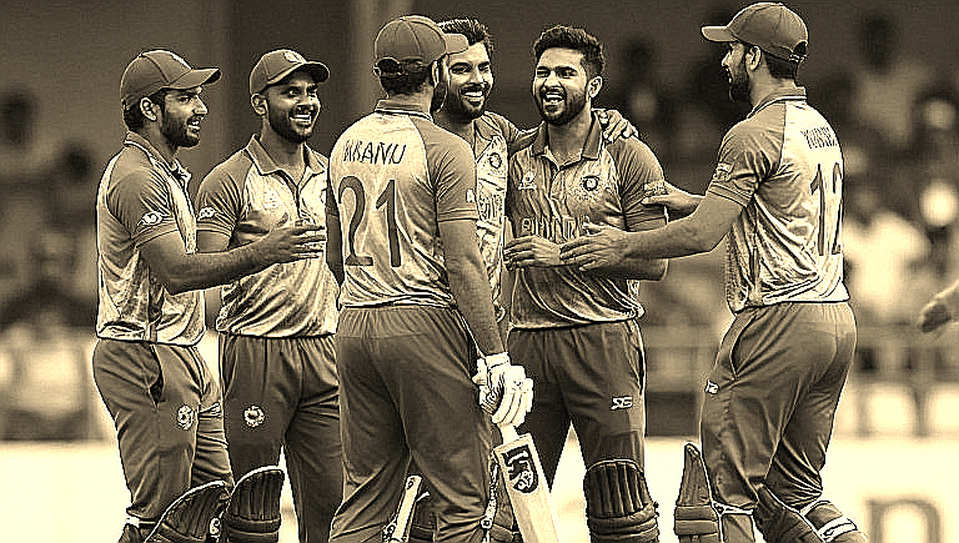
The first audit begins there. At 203/1 South Africa had two set batters and a pitch that was easing. What they did not have was a middle order. This innings was built in two storeys from the start — three at the top, four at the bottom — and the floors between them had no settled plan. When your numbers four, five and six average roughly the same as each other, and your most reliable batter is sitting at seven, then 203/1 is a sheet pulled over the furniture. The longer you leave it there, the more it costs to pull it back. Starc pulled it in the eightieth over.
The second new ball was not a sudden crisis for South Africa. It was written on the calendar. This is the point I keep returning to: a collapse is rarely an event; it is a schedule — and at Newlands the schedule was the eightieth over.
Starc removed David Bedingham for 50 and Wiaan Mulder for a duck. The Bedingham ball is the one the broadcast called a set-up, and here I have no trouble agreeing with the box. Watch it frame by frame: three balls shaping away, the fourth arriving from the same release point and going the other way. Bedingham's backlift had already been tuned to the third ball's rhythm. The geometry was right, and there is no reason to hide that. A forensic writer who only ever contradicts the commentary is just a different kind of pundit.
Mulder's ball was cleaner still — seam upright, the ball holding its height, the batter's foot unmoved. Two balls took South Africa from 203/2 to 203/3. But the real question is not what Starc bowled. It is what happened at four, five and six afterwards — because that is where the innings lost its shape, and that is where the 95-run seventh-wicket stand came from, which is this innings' central contradiction.
Jansen and Rickelton added 95. For a side whose four, five and six had already gone, that was a genuine recovery — and it was proof that no demon was living in the pitch. A batter with technique could bat. South Africa's biggest mistake was not made where they got out. It was made during that 95-run stand, when they let the second new ball be survived the same way they had survived the first hour on day one, even though the score was now past 250 and the weight of the innings had shifted onto the tail.
Then Starc returned with the second new ball. Rickelton caught for 42. Jansen bowled for 52 — the ball coming in and clipping half the stump. Then Gerald Coetzee and Kagiso Rabada, both first ball, both for nought. Four wickets in six balls. And between those two golden ducks sat a hat-trick ball that Rabada somehow kept out — which is to say nothing was saved, only one delivery postponed.
The field map I noted for the tail: slip, gully, short leg, and a short cover standing inside the crease. Not every frame in the broadcast cut was clean, so treat that map as an estimate rather than a document — the margin of error is one fielder's width. But this much I will assert: there was no delivery to the ninth and tenth men that deserves the word unplayable. What there was, was angle. A left-arm seamer over the wicket, wide of the crease, with a new ball — that is the hardest question a tail faces, because it forces the batter to decide whether the ball is on the stumps before it has arrived. Coetzee and Rabada both got that decision wrong. Two different batters, one identical error, inside six deliveries — that is not a technical coincidence, that is a coaching question.
The most important thing about a tail's collapse never appears on a scorecard: it is usually a record of batting coaching, not of fast bowling. South Africa's lower order this series has looked familiar to me from years of footage — no first-ball defence, first-ball attack, and a front pad parked in front of middle when the new ball arrives.
Now the numbers. Six for 72 is Starc's best against South Africa, better than the 6/154 at Perth in 2026. It is his twentieth five-wicket haul in Tests and his twenty-ninth in international cricket — 20 in Tests, 9 in ODIs — which puts him alongside Dale Steyn. Among active fast bowlers it is the highest count: Kagiso Rabada 17, Jasprit Bumrah 16, Josh Hazlewood 15, Pat Cummins 14, Kemar Roach 11.
Pause here, because this is the point where the headline and the arithmetic part company.
Starc's 20 have come in 210 innings. Rabada's 17 in 136. Bumrah's 16 in 99. Hazlewood's 15 in 151. Cummins' 14 in 141. Roach's 11 in 156. Divide innings by hauls and you get innings per five-for: Starc roughly 10.5, Rabada 8.0, Bumrah 6.2, Hazlewood and Cummins about 10.1, Roach 14.2.
The list of most five-wicket hauls among active fast bowlers is not a dominance chart. It is an availability chart. Starc sits on top because Starc has been on the park the longest, not because he is the most lethal per innings. Bumrah needed 99 innings for 16; Starc needed 210 for 20. That comparison does not diminish Starc — it simply tells you what we are applauding. Turning up, repeatedly, is a skill. Selling that skill as dominance is the mistake that comes free with the table.
On the all-time international list of fast bowlers, Starc sits sixth with 29, level with Steyn. Ahead of him: Richard Hadlee 41, Glenn McGrath 36, Waqar Younis 35, James Anderson 34, Wasim Akram 31. But Steyn's 26 Test hauls came in 93 Tests, roughly 171 innings — one every 6.6 innings. Starc's rate is 10.5. Two men on 29, and not the same thing at all. A tied number is not a tied bowler.
Now the column I keep beside every fast bowler's name, whether or not anyone asked for it.
Starc has already bowled in 210 Test innings. That figure excludes the overs in the IPL, the overs in the Big Bash, and the overs in the practice matches nobody publishes a card for. The ledger cricket keeps worst is precisely this one — net overs, franchise spells, flight days. In 2026, when a player-management firm paid me to build Jasprit Bumrah's return-to-bowling protocol, the lesson landed permanently: the fractured thumb was not the number that mattered; the number that mattered was the eleven days between the IPL final and the flight to England. So with Starc's 6/72 I am not asking how good the deliveries were. I am asking what his body absorbed in the three weeks before this spell, and what it will absorb across the two innings still to come.
The ledger raises the question the card cannot answer. The strongest evidence for Starc's value is not his tally, it is his selection — and selection is always paid for in the matches he cannot play or the spells he cannot finish. The franchise calendar that runs under his name is the part of this ledger no table requests.
I kept pulling on the frame until the story came apart at the seam, and here it did. Watch the six wickets as one spell and it reads as continuous magic. Lay them out by over number and they arrive in two clusters — one immediately after 203/1, one with the second new ball. In between, Jansen and Rickelton put on 95 and Starc took nothing. Which is to say Starc did not break the innings. He aimed at the two places where the innings was already weak. Calling that magic insults the craft that actually happened — and the craft is the more interesting story.
And here is where the broadcast was right, because this piece is half-written without it. The ball that bowled Jansen I watched several times. It was not on middle when it pitched. It started on off and came in, the whole way. That is the delivery the commentary box exists for. The Bedingham set-up was real too: three away, one in. When the box is correct, saying so is part of the job. A writer who only ever objects is not an analyst, he is another pundit.
My objection is elsewhere: to reading 329 as a South African defeat when it was simply another day of a South African condition. Going from 203/1 to 329 all out is not an aberration; it is the habit of a side with three batters and seven improvisers. When your seventh-wicket stand is the second-largest of your innings, your problem is not the bowling. When your eight, nine and ten have no plan for a new ball, your problem is bigger than Starc's angle. At Newlands Starc did the job he is picked to do — break a tail with the second new ball. That is not a marvel, it is a profession. The marvel would have been South Africa arriving prepared for it.
Inside this spell there is one human line I will not put on a graph. Rickelton on 42, Jansen on 52 — and Starc took four wickets in six balls. When Coetzee went for nought, the one batter who had passed fifty in the innings was standing at the non-striker's end watching his side's tail leave in a single over. That image is not technical. It is simply human, and it is as true as the 6/72. One sentence, then back to the arithmetic.
323/8, 324/9, 329/10 — the ledger is clean. Which is exactly the trap: a clean ledger feels like a closed case. It is not. I do not have ball-tracking data, I do not have the overs Starc bowled in the three weeks before this Test, and I do not have the data on how this Newlands surface will behave on day four. What the ledger omits is whether, had South Africa settled four, five and six into any order at all, Starc would even have needed the second new ball. In an innings shaped 140, 95, 94, the honest conclusion is that the bowler opened a door and the batters walked through it and shut themselves in.
The day ended on 329 and Starc's twentieth haul. The series is 1-1 and this Test decides it. The question on the second morning is not how good Starc is. It is how Australia reads 329 — as a score, or as a warning.

I have only what you have: the first hour of day two. If Newlands keeps the seam it offered on day one, 329 is short and this match could finish inside two days. If the breeze shifts and the seam goes to sleep, 329 is plenty against a tail that will not find anything called confidence after yesterday's six balls. I will watch that first hour the way I watched yesterday — in freeze-frame, noting overs, and leaving a column open beside every spell for the deliveries nobody logged.
If yesterday's six balls taught anything, it is this: the ball goes where it is sent, and wickets fall where the batter was already weak. Which of the two carried more weight, the first ten overs of Newlands' second innings will tell us.